- What Are Global Marketplaces?
- Why Sell on Global Marketplaces From India?
- Top Global Marketplaces for Indian Sellers
- Documents and Registrations You Need
- How to Sell on Global Marketplaces: Step-by-Step
- Fulfilment Options: Ship From India or Stock Abroad?
- Getting Paid: Payments, Currency and Export Proof
- Duties, Taxes and Customs Abroad
- Common Mistakes to Avoid When Selling Globally
- Ship Your Marketplace Orders Abroad With Shiprocket X
- ਸਿੱਟਾ
A saree brand in Surat gets a message on Instagram from a shopper in New Jersey. “Do you ship to the US?” The founder says yes, ships one parcel, and then wonders how to get a hundred more orders like it without answering every DM by hand.
ਇਹੀ ਉਹ ਥਾਂ ਹੈ ਜਿਥੇ ਗਲੋਬਲ ਬਾਜ਼ਾਰ come in. Platforms like Amazon, Etsy and eBay already have millions of buyers abroad, plus the search, payments and trust signals you’d otherwise build from scratch. For an Indian seller, they’re the fastest route from a domestic business to an export business.
This guide explains how to sell on global marketplaces from India, step by step. You’ll learn which platform suits which product, the documents you need, how fulfilment and payments work, and the mistakes that eat into margins.
What Are Global Marketplaces?
Global marketplaces are online platforms where sellers from many countries list products for buyers in other countries. The marketplace handles the storefront, search, checkout and buyer payments. You handle the product, the listing and, in most cases, getting the order to the buyer.
For Indian sellers, selling on a global marketplace is a form of eCommerce export. Each overseas order is an export shipment, so the usual export rules apply: registrations, invoices, customs declarations and foreign currency payments. If you’re new to the idea, our primer on ਸਰਹੱਦ ਪਾਰ ਈ-ਕਾਮਰਸ ਮੂਲ ਗੱਲਾਂ ਨੂੰ ਕਵਰ ਕਰਦਾ ਹੈ।
Why Sell on Global Marketplaces From India?
Selling through a marketplace gets you in front of international buyers far faster than building your own export website. Here’s why so many Indian brands start this way.
- Ready-made demand. Buyers already search these platforms daily. You don’t need to build traffic from zero in a new country.
- Low setup cost. You don’t need a foreign company, office or warehouse to start. Most platforms let you register from India.
- Built-in trust. Shoppers trust the marketplace’s checkout, reviews and buyer protection, which helps a new brand get its first orders.
- Room to test. You can list a few products in one country, learn what sells, and then expand.
- Strong fit for Indian products. Handicrafts, ethnic wear, jewellery, home decor, Ayurveda and wellness products, and spices all have loyal buyers abroad, including the Indian diaspora.
Top Global Marketplaces for Indian Sellers
There’s no single best marketplace. The right one depends on your product, your target country and how much fulfilment work you want to take on. This table compares the most common options.
| ਬਾਜ਼ਾਰ | ਮੁੱਖ ਬਾਜ਼ਾਰ | ਲਈ ਵਧੀਆ | Fulfilment options |
|---|---|---|---|
| ਐਮਾਜ਼ਾਨ ਗਲੋਬਲ ਵਿਕਰੀ | US, UK, Canada, UAE, Saudi Arabia, Europe, Australia and more | Branded products with repeat demand, from apparel to home and kitchen | Ship from India (MFN) or stock in Amazon warehouses (FBA) |
| etsy | US, UK, Europe, Australia and Canada | Handmade, vintage, craft supplies and personalised items | Ship from India |
| ਈਬੇ | US, UK, Australia, Germany and more | Collectibles, niche items, jewellery and refurbished goods | Ship from India |
| ਵਾਲਮਾਰਟ ਮਾਰਕੀਟਪਲੇਸ | US | Mainstream consumer goods with competitive pricing | Ship to US buyers or use Walmart’s fulfilment service |
| ਦੁਪਹਿਰ | ਯੂਏਈ, ਸਾਊਦੀ ਅਰਬ, ਮਿਸਰ | Fashion, beauty and home products for the Gulf | Ship to buyers or stock in Noon warehouses (FBN) |
Seller eligibility changes over time, especially for Walmart and Noon, which usually need a local business presence or approval. Check each platform's current requirements for sellers based in India before you plan around it.
ਐਮਾਜ਼ਾਨ ਗਲੋਬਲ ਵਿਕਰੀ
Amazon is the largest option for most Indian exporters. According to Amazon's Global Selling page, Indian sellers can register once and list across more than 18 Amazon marketplaces, with payments made in INR to an Indian bank account. Our full guide to ਐਮਾਜ਼ਾਨ ਗਲੋਬਲ ਵਿਕਰੀ walks through registration in detail.
etsy
Etsy is built for handmade, vintage and creative products. If you make block-printed textiles, jewellery or home decor, it's often a better fit than Amazon, because buyers come looking for unique items. Read how to sell on Etsy from India for setup tips.
ਈਬੇ
eBay works well for niche, collectible and one-of-a-kind products. It runs a cross-border trade programme for Indian sellers, and you ship orders directly from India. Our guide for eBay sellers covers listings and account health.
For a wider list of platforms, see our roundup of ecommerce marketplaces to sell your products globally.
Documents and Registrations You Need
You need a handful of Indian registrations before you can sell on global marketplaces legally. Get these in place first, because marketplaces and customs will ask for them.
| ਦਸਤਾਵੇਜ਼ | ਇਹ ਕੀ ਹੈ | ਤੁਹਾਨੂੰ ਇਸਦੀ ਲੋੜ ਕਿਉਂ ਹੈ |
|---|---|---|
| ਜੀਐਸਟੀ ਰਜਿਸਟ੍ਰੇਸ਼ਨ | Your Goods and Services Tax number | Required to export goods and claim GST benefits |
| ਪੈਨ | Permanent Account Number of the business or proprietor | Used for tax, IEC and marketplace KYC |
| ਆਯਾਤ ਨਿਰਯਾਤ ਕੋਡ (IEC) | A 10-digit code issued by the ਵਿਦੇਸ਼ੀ ਵਪਾਰ ਡਾਇਰੈਕਟੋਰੇਟ ਜਨਰਲ (DGFT) | Mandatory for most commercial exports from India |
| ਲੈਟਰ ਆਫ ਅੰਡਰਟੇਕਿੰਗ (LUT) | A yearly declaration filed on the GST portal | Lets you export without paying IGST upfront |
| AD ਕੋਡ | A code from your bank, registered with customs | Links your export shipments to your bank for payments |
| Current bank account | An account that can receive foreign remittances | To receive marketplace payouts and get FIRA or e-BRC |
| ਉਤਪਾਦ ਦੀ ਪਾਲਣਾ | Certificates such as FSSAI, lab tests or labels, as needed | Some categories and countries need extra approvals |
Applying for an IEC is online and usually quick. Our step-by-step guide to the ਅਯਾਤ ਐਕਸਪੋਰਟ ਕੋਡ shows the process.
Also check the export and import rules for each product. Some items can't be shipped at all, so review the list of prohibited items for international shipping before you list anything.
How to Sell on Global Marketplaces: Step-by-Step
Here's the full process, from picking a market to getting paid. The diagram gives the quick view, and each step is explained below.
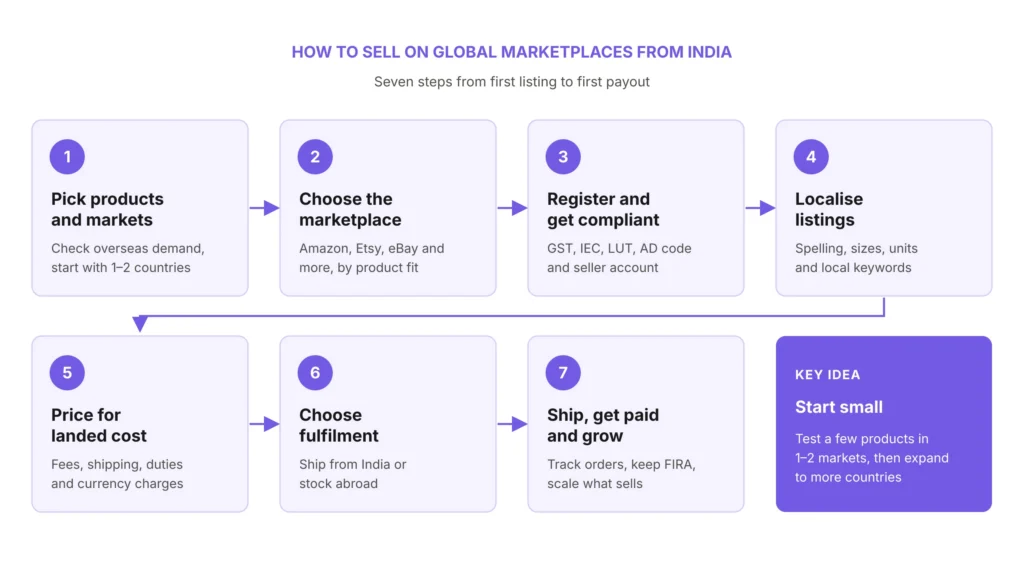
Step 1: Pick Your Products and Target Markets
Start with demand, not with the platform. Look at which of your products already sell well in India, then check if overseas buyers search for them.
Search for your product on Amazon.com, Etsy and eBay. Note the prices, number of reviews and competing sellers. Our guide to export market selection explains how to compare countries on demand, competition and costs.
Begin with 1–2 countries and a few best-selling products. It's much easier to learn from a small test than from 200 listings in five countries.
Step 2: Choose the Right Marketplace
Match the platform to your product and buyer. A handmade brass lamp fits Etsy. A branded protein bar fits Amazon. A vintage camera fits eBay.
Also compare fees. Most marketplaces charge a referral or transaction fee per sale, and some add listing, subscription, payment processing or currency conversion fees. Use each platform's own fee calculator for your category and target country.
Step 3: Complete Registrations and Set Up Your Seller Account
Get your GST, IEC and LUT ready, then register on the marketplace. You'll typically need ID and address proof, business details, a bank account and a credit or debit card that works for international transactions.
If you already sell on Amazon India, you can start global selling from your existing Seller Central account instead of starting over.
Step 4: Create Localised Listings
A listing that works in India may not work in the US or UK. Localise each listing for the country you're selling to:
- Language and spelling: "color" for the US, "colour" for the UK.
- ਨਾਪ: inches and pounds for the US, centimetres and kilograms for the UK and Europe.
- ਆਕਾਰ: convert Indian sizes to US, UK or EU size charts.
- ਕੀਵਰਡ: use the terms local buyers search for. A US shopper may search "tunic top" rather than "kurti".
- ਚਿੱਤਰ: clean, high-resolution photos on a white background, plus lifestyle shots that show scale.
Step 5: Set Prices That Cover the Full Landed Cost
Your price has to cover much more than the product. Add up the product cost, packaging, international shipping, marketplace fees, payment and currency conversion charges, advertising, returns, and any duties you pay for the buyer.
That total is your landed cost. Our guide on how to calculate ਜ਼ਮੀਨ ਦੀ ਲਾਗਤ shows how to work it out per market.
Step 6: Choose a Fulfilment Model
Decide whether you'll ship each order from India or stock inventory abroad. This choice affects your delivery speed, costs and cash flow, so it gets its own section below.
Step 7: Ship, Get Paid and Grow
Once orders come in, ship them on time with tracking, collect your export paperwork, and track payouts. Then use your sales data to decide what to scale: more products, more countries, or a second marketplace.
Fulfilment Options: Ship From India or Stock Abroad?
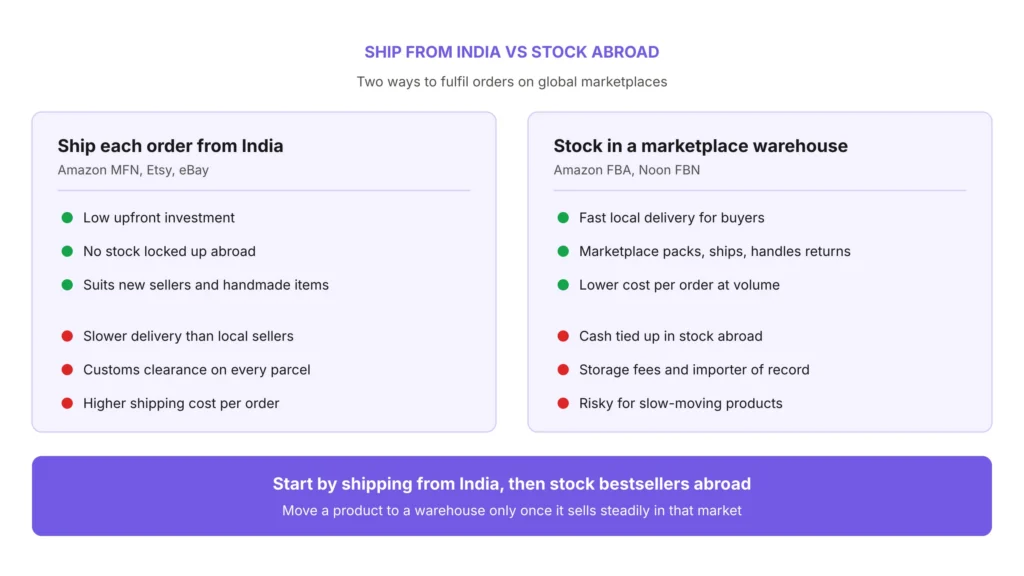
There are two main ways to fulfil orders on global marketplaces. Many sellers start with the first and move to the second once they find products that sell well.
Ship Each Order From India
You keep stock in India and ship each order directly to the buyer, using an international courier or shipping aggregator. On Amazon this is called Merchant Fulfilled Network (MFN). Etsy and eBay sellers in India mostly work this way.
It needs little upfront investment and suits new sellers, handmade products and slow-moving items. The trade-off is longer delivery times than local sellers can offer.
Stock Inventory in a Marketplace Warehouse
You send stock in bulk to the marketplace's warehouse in the destination country. The marketplace stores, packs and delivers each order and handles many returns. On Amazon this is Fulfillment by Amazon (FBA). On Noon it's Fulfilled by Noon (FBN).
Buyers get faster delivery, which helps conversions. But you pay storage fees, need an importer of record, and lock cash into stock abroad. It works best for products with steady demand.
Courier Export Modes: CSB-IV and CSB-V
When you ship eCommerce orders from India by courier, customs clears them under Courier Shipping Bill forms. CSB-V is the form for commercial eCommerce exports, and it allows export benefits that gift-style CSB-IV shipments don't. Our explainer on CSB-IV vs CSB-V covers the differences.
Getting Paid: Payments, Currency and Export Proof
Marketplaces collect money from buyers in their local currency and pay you out, after deducting their fees. How that money reaches your Indian bank account matters for both margin and compliance.
- Payout route: some marketplaces pay directly in INR to your Indian bank. Others pay through a payment service provider or a foreign currency account.
- ਮੁਦਰਾ ਪਰਿਵਰਤਨ: each conversion can carry a markup. Compare the effective rate you get with the market rate.
- Export proof: for every export payment, you need a Foreign Inward Remittance Advice (FIRA) or e-BRC. These prove you received foreign currency, which matters for GST refunds and export incentives.
- ਮੇਲ-ਮਿਲਾਪ: match each payout to your orders and shipping bills. Unmatched payments create problems with your bank and GST filings.
Proper export paperwork can also make you eligible for schemes like RoDTEP, which refunds certain embedded taxes and duties on exported products.
Duties, Taxes and Customs Abroad
Every country sets its own import duties and taxes. Some let low-value parcels in duty-free below a set value, known as the de minimis threshold. Others charge on almost every parcel.
Check the rules for each target country. Our list of ਦੇਸ਼ ਅਨੁਸਾਰ ਘੱਟੋ-ਘੱਟ ਮੁੱਲ ਇੱਕ ਚੰਗਾ ਸ਼ੁਰੂਆਤੀ ਬਿੰਦੂ ਹੈ।
Then decide who pays. If the buyer pays duties on delivery, they may refuse the parcel. If you pay them upfront, known as Delivered Duty Paid (DDP), the buyer gets a smooth delivery and you price duties into the product.
Accurate customs data keeps parcels moving. Use the right ਅੰਤਰਰਾਸ਼ਟਰੀ ਸ਼ਿਪਿੰਗ ਵਿੱਚ HS ਕੋਡ for every product, with a clear description and the true value.
Common Mistakes to Avoid When Selling Globally
Most problems for new global sellers come from a few avoidable mistakes:
- Launching in too many markets at once. Spreading thin makes it hard to manage ads, stock and customer service.
- Pricing from the Indian MRP. Fees, shipping and duties can wipe out your margin if you don't price for landed cost.
- Copy-pasting Indian listings. Wrong sizes, units or keywords lead to low sales and more returns.
- ਕਮਜ਼ੋਰ ਪੈਕੇਜਿੰਗ। International parcels travel further and get handled more often. Follow these international shipping packaging tips.
- Ignoring account health. Late shipments, cancellations and slow replies can get your account suspended.
- Skipping paperwork. Missing FIRA or wrong shipping bills can block GST refunds and incentives.
- Forgetting time zones. Buyers expect quick replies. Set up templates and check messages at times that suit your main market.
Ship Your Marketplace Orders Abroad With Shiprocket X
Once orders start coming in from global marketplaces, shipping is where many Indian sellers get stuck. Shiprocket X is Shiprocket's cross-border shipping platform, built for exactly this. It covers 220+ countries and territories, lets you connect your global marketplace and store accounts to bring orders into one dashboard, and supports both CSB-IV and CSB-V order upload. Through its partnership with eBay, Indian sellers on eBay's cross-border trade programme can also pick Shiprocket X to ship their eBay orders.
You can compare international courier options for each order, offer duty-paid shipping on supported lanes, and share a branded tracking page with real-time WhatsApp and email updates. For US orders, our guide on ਅਮਰੀਕਾ ਦੇ ਸ਼ਿਪਮੈਂਟ ਲਈ ਡੀ.ਡੀ.ਪੀ. explains how duties are estimated and handled at booking.
ਸਿੱਟਾ
Global marketplaces are the most practical way for an Indian business to start selling abroad. They give you buyers, payments and trust from day one, so you can focus on product, listings and delivery.
Start small. Get your GST, IEC and LUT in place, pick one marketplace and one or two countries, and price for your full landed cost. Ship reliably, keep your paperwork clean, and expand to more products and markets once you know what sells.