
- ਸੀਈ ਸਰਟੀਫਿਕੇਸ਼ਨ ਕੀ ਹੈ?
- Which Products Need CE Marking?
- Not Every Product Needs CE, But Every Product Has Rules
- How the CE Marking Process Works
- Technical Documentation and the Declaration of Conformity
- Who Is Responsible: Manufacturer, Importer and Others
- What Happens When Products Don’t Comply
- Pre-Market Compliance Checklist for Exporting to Europe
- CE Compliance Tips for Indian Manufacturers
- Ship Compliant Products to Europe With Shiprocket X
- ਸਿੱਟਾ
Your bestselling LED desk lamp has BIS registration, a GST invoice and a steady stream of five-star reviews in India. Then a buyer in Germany asks for the CE declaration of conformity, and your Amazon.de listing gets stuck asking for “EU responsible person” details. The product is the same one you sell at home. What’s missing is the European paperwork.
That gap is what ਸੀਈ ਸਰਟੀਫਿਕੇਸ਼ਨ is about. A product that’s legal to sell in India isn’t automatically legal to sell in the European Union. Indian approvals like BIS or ISI don’t carry over, and the EU wants proof, in its own format, that the product meets its own safety, health and environmental rules.
This guide is for Indian manufacturers and D2C brands that want to export products to Europe. It covers what CE marking is, which products need it, how the conformity assessment works, the documents you need, who is responsible for what, and a pre-market compliance checklist to run before your first shipment leaves.
ਸੀਈ ਸਰਟੀਫਿਕੇਸ਼ਨ ਕੀ ਹੈ?
CE certification is the common name for the process behind the CE mark. The letters stand for “Conformité Européenne”. By placing the mark on a product, the manufacturer declares that the product meets all the EU requirements that apply to it.
The name causes confusion, because there is no single “CE certificate” that the EU issues. The EU’s official business portal, Your Europe, says plainly that there’s no central EU body that gives you permission or a certificate to use the CE mark. You, the manufacturer, carry out the checks, keep the evidence and sign the declaration.
Some products do need an independent check by a “notified body”, a testing and certification organisation approved by an EU country. Even then, the notified body certifies a step in the process. The manufacturer still draws up the declaration and places the mark.
Three more points worth knowing early:
- The CE mark is a safety and compliance mark, not a quality badge.
- Once a product carries a valid CE mark, it can move freely across the European Economic Area, which covers the 27 EU countries plus Iceland, Liechtenstein and Norway.
- The mark must be at least 5 mm high, unless specific product rules say otherwise, and must be visible, legible and indelible.
Which Products Need CE Marking?
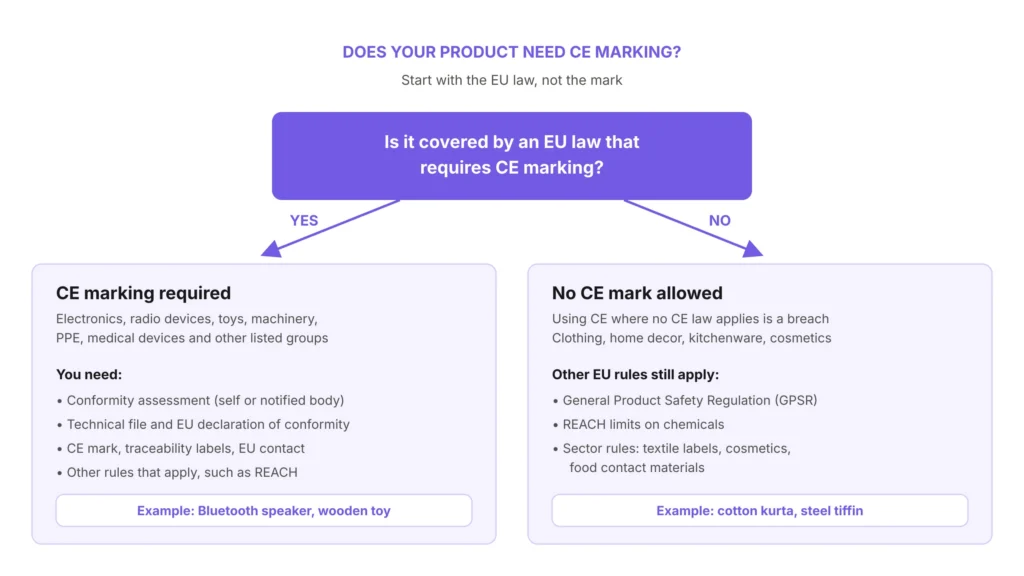
CE marking is required only for products covered by EU “harmonisation” laws that specifically call for it. If no such law covers your product, CE marking must not be used. Putting it on a cotton kurta or a brass diya to look more official is itself a breach.
Your Europe lists these as product groups that need CE marking. The list is not exhaustive, so always check the law for your exact product:
| ਉਤਪਾਦ ਸਮੂਹ | Main EU law (examples) | Typical Indian export products |
|---|---|---|
| ਇਲੈਕਟ੍ਰੀਕਲ ਅਤੇ ਇਲੈਕਟ੍ਰਾਨਿਕ ਉਪਕਰਣ | Low Voltage Directive 2014/35/EU, EMC Directive 2014/30/EU, RoHS Directive 2011/65/EU | LED lamps, chargers, kitchen appliances, fans |
| ਰੇਡੀਓ ਉਪਕਰਣ | ਰੇਡੀਓ ਉਪਕਰਨ ਨਿਰਦੇਸ਼ 2014/53/EU | Bluetooth speakers, smartwatches, Wi-Fi devices |
| ਖਿਡੌਣੇ | ਖਿਡੌਣਾ ਸੁਰੱਖਿਆ ਨਿਰਦੇਸ਼ 2009/48/EC | Wooden toys, soft toys, educational kits |
| ਮਸ਼ੀਨਰੀ | Machinery Directive 2006/42/EC, replaced by Machinery Regulation (EU) 2023/1230 from 20 January 2027 | Food processing machines, pumps, packaging machines |
| ਨਿੱਜੀ ਸੁਰੱਖਿਆ ਉਪਕਰਨ | ਪੀਪੀਈ ਰੈਗੂਲੇਸ਼ਨ (ਈਯੂ) 2016/425 | Safety gloves, helmets, high-visibility jackets |
| ਮੈਡੀਕਲ ਉਪਕਰਣ | ਮੈਡੀਕਲ ਡਿਵਾਈਸ ਰੈਗੂਲੇਸ਼ਨ (EU) 2017/745 | Diagnostic equipment, surgical instruments |
| ਹੋਰ | Separate laws for each | Gas appliances, pressure equipment, measuring instruments, batteries, drones, pyrotechnics, recreational craft |
A single product often falls under more than one law. A Bluetooth speaker is radio equipment, so it falls under the Radio Equipment Directive, and the RoHS rules on restricted substances in electronics apply too. Your CE marking has to cover every law that applies, not just the most obvious one.
Not Every Product Needs CE, But Every Product Has Rules
This is the part many first-time exporters miss. If your product doesn’t need CE marking, it isn’t free of EU rules. It simply follows a different set of them.
The main safety net is the ਜਨਰਲ ਉਤਪਾਦ ਸੁਰੱਖਿਆ ਨਿਯਮ (EU) 2023/988, or GPSR, which has applied since 13 December 2024. It covers consumer products that aren’t fully covered by sector laws. Clothing, home decor, kitchenware, stationery and handicrafts are typical examples from Indian sellers. Under the GPSR, consumer products must be safe, traceable to the manufacturer, and linked to a responsible economic operator in the EU.
Other EU rules apply depending on what you sell:
- ਰਸਾਇਣ: REACH restricts certain substances in articles, such as some dyes, metals and plasticisers. This matters for textiles, leather, jewellery and plastics.
- ਕੱਪੜਾ: the Textile Labelling Regulation (EU) 1007/2011 sets rules for fibre composition labels.
- ਸ਼ਿੰਗਾਰ: the Cosmetics Regulation (EC) 1223/2009 needs an EU responsible person and a product notification before sale. Cosmetics don’t carry a CE mark.
- Food contact materials: Regulation (EC) 1935/2004 applies to items such as steel tiffins, bamboo cutlery and kitchen utensils.
So the first question is not “How do I get CE?” It’s “Which EU rules apply to my product?” The answer may include CE marking, other rules, or both.
How the CE Marking Process Works
The CE marking process follows the same broad steps across most product groups. Your Europe’s CE marking guidance sets out the core stages, and the detail comes from the law for your product.
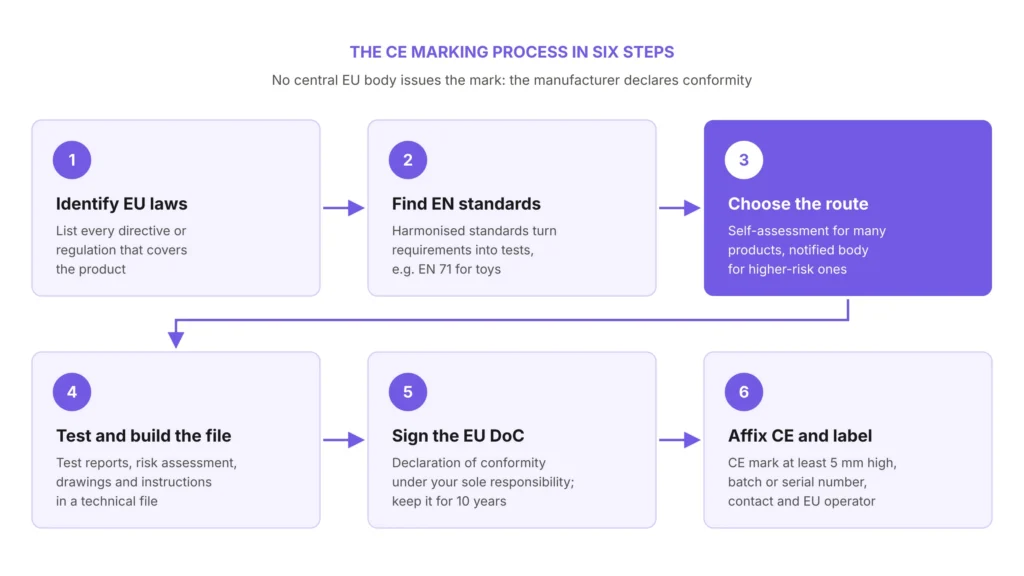
1. Identify the applicable EU laws
List every directive or regulation that covers your product. Each law sets out “essential requirements”, the safety and performance results your product must achieve.
2. Find the harmonised standards
Harmonised European standards, labelled “EN”, turn those requirements into testable specifications. The EN 71 series covers toys, for example. Following a harmonised standard gives a “presumption of conformity”, which makes it much easier to prove compliance.
3. Choose the conformity assessment route
Each law tells you which product conformity assessment procedure to use. For many low-risk products, the manufacturer can assess conformity itself through internal production control. Higher-risk products, such as some machinery, PPE and most medical devices, need a notified body. Search the EU’s NANDO database to find a notified body authorised for your product and procedure.
4. Test the product and build the technical file
Get the product tested against the relevant standards, often at an accredited lab, and compile the evidence. More on the technical file below.
5. Draw up and sign the EU declaration of conformity
This is your formal, signed statement that the product complies.
6. Affix the CE mark and label the product
Add the CE mark, plus the notified body’s four-digit number if one was involved. Add your traceability details too: a type, batch or serial number and your contact information.
Here’s how the route can differ across categories:
- ਖਿਡੌਣੇ: a wooden puzzle tested in full against EN 71 can usually follow internal production control. If you don’t apply the harmonised standards in full, you need an EU-type examination by a notified body.
- ਇਲੈਕਟ੍ਰਾੱਨਿਕ a mains-powered LED lamp is usually self-assessed under the Low Voltage, EMC and RoHS rules, backed by test reports.
- ਮਸ਼ੀਨਰੀ: most machinery is self-assessed, but some high-risk categories listed in the law need a notified body.
Technical Documentation and the Declaration of Conformity
These two documents are the backbone of CE compliance for Indian manufacturers. Authorities, importers and marketplaces may ask for them, so keep them ready and up to date.
ਤਕਨੀਕੀ ਫਾਈਲ
The technical file proves your product meets the requirements. Your Europe’s product compliance pages say it should cover the product’s description, intended use, design, manufacture and operation. In practice, a good file includes:
- the manufacturer’s name and address, and the product’s description and identification;
- design and manufacturing drawings, circuit diagrams and a parts list;
- a risk assessment showing which hazards apply and how you addressed them;
- the list of harmonised standards applied, and test reports;
- notified body certificates, where needed;
- user instructions and safety information;
- a copy of the EU declaration of conformity.
You must keep the technical file and the declaration for at least 10 years after the product is placed on the market, unless the specific law sets a different period.
The EU declaration of conformity
The EU declaration of conformity, or DoC, is usually one or two pages. It typically includes the product’s identification, the manufacturer’s name and address, a statement that you issue it under your sole responsibility, the EU laws and standards applied, notified body details if relevant, and a dated signature.
Update the DoC if the product, the applicable law or your contact details change. A DoC that cites an outdated directive is a common reason importers push back.
Who Is Responsible: Manufacturer, Importer and Others
CE rules assign duties to each “economic operator” in the supply chain. If you’re an Indian brand selling directly to European consumers, you may have to make sure several of these roles are covered.
| ਭੂਮਿਕਾ | Who it usually is | ਮੁੱਖ ਜ਼ਿੰਮੇਵਾਰੀਆਂ |
|---|---|---|
| ਨਿਰਮਾਤਾ | The Indian brand or factory whose name is on the product | Design to EU rules, conformity assessment, technical file, DoC, CE mark, labels and instructions |
| ਅਧਿਕਾਰਤ ਪ੍ਰਤੀਨਿਧੀ | An EU-based firm you appoint in writing | Acts for you with authorities, keeps documents available, handles some tasks under mandate |
| ਆਯਾਤ | The EU business that first places your product on the EU market | Checks you’ve done your part, adds its own name and address, keeps a DoC copy, cooperates with authorities |
| Distributor or retailer | Shops and resellers in the EU | Checks the CE mark, labels and documents before selling |
| ਆਨਲਾਈਨ ਬਾਜ਼ਾਰ | Amazon, eBay, Etsy and others | Must act on unsafe products and require trader and product details in listings |
There’s one rule that matters a lot for cross-border D2C sellers. Under the Market Surveillance Regulation (EU) 2019/1020, many CE-marked products, including toys, electronics, radio equipment and machinery, can only be placed on the EU market if an economic operator is established in the EU. That can be an EU importer, an authorised representative, or, where none of those exists, an EU fulfilment service provider. The GPSR sets a similar requirement for other consumer products.
So if you ship straight from India to a customer in France, you still need an EU-based responsible party named on the product, its packaging, the parcel or an accompanying document.
What Happens When Products Don’t Comply
Compliance problems rarely announce themselves early. They tend to show up at the worst possible moment, after you’ve paid for production, packaging and freight.
- Customs intervention: EU customs can suspend release of goods they suspect are non-compliant and refer them to market surveillance authorities. If the products are found unsafe or non-compliant, release can be refused.
- Shipment rejection: importers and B2B buyers often refuse to accept goods without a valid DoC or proper labels, leaving you with return freight or disposal costs.
- Marketplace listing restrictions: marketplaces ask sellers for responsible person details, safety information and sometimes documents. Listings without them can be blocked or removed.
- Withdrawals and recalls: authorities can order products to be withdrawn from sale or recalled from consumers. Dangerous products are published on Safety Gate, the EU’s public rapid alert system, which can hurt your brand.
- ਜ਼ੁਰਮਾਨੇ: EU countries set their own fines for breaches, on top of the cost of fixing the problem.
Indian sellers can find the official guidance on these duties in Your Europe’s section on selling products safely in the EU.
Pre-Market Compliance Checklist for Exporting to Europe
Run through this checklist before you list a product or book your first shipment. It works for both B2B consignments and D2C parcels.
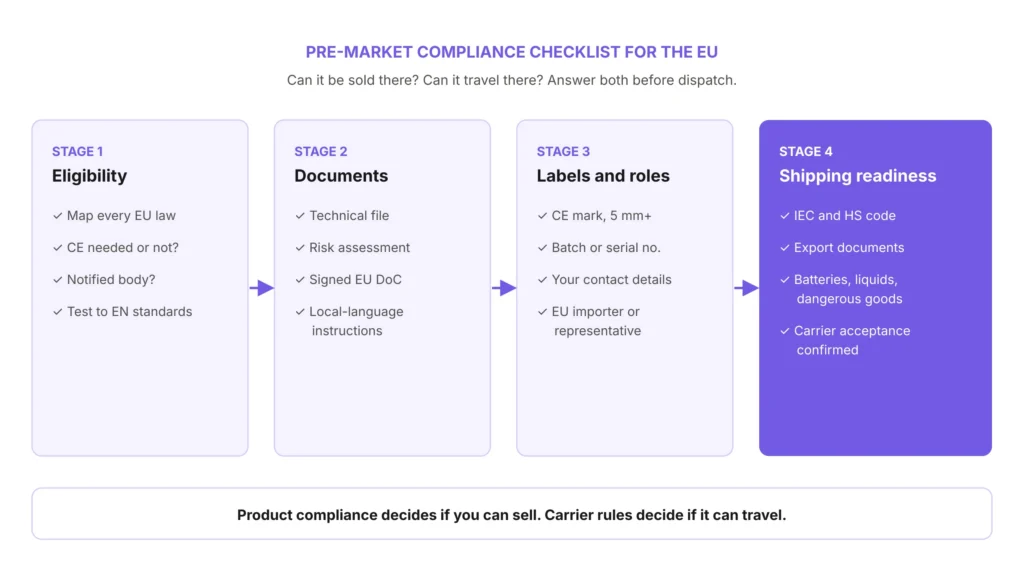
ਉਤਪਾਦ ਯੋਗਤਾ
- Identify every EU law that applies to the product, including CE laws, the GPSR, REACH and sector rules.
- Confirm whether CE marking is required. If it isn’t, don’t use it.
- Check whether a notified body is needed, and book it early, because it adds time.
- Test against harmonised standards at a competent lab.
ਦਸਤਾਵੇਜ਼
5. Build the technical file, including the risk assessment and test reports.
6. Sign an EU declaration of conformity that lists every applicable law.
7. Prepare instructions and safety warnings in the language of each country you sell to.
Labelling and roles
8. Place the CE mark at the correct size, with the notified body number if needed.
9. Add your name and contact details, a batch or serial number, and the EU responsible operator’s details.
10. Appoint an EU importer, authorised representative or fulfilment provider where the law needs one.
Shipping readiness
11. Get the export basics right: your IEC, the correct HS ਕੋਡ and a full set of ਨਿਰਯਾਤ ਦਸਤਾਵੇਜ਼.
12. Check carrier acceptance for your product, especially batteries, liquids, aerosols and anything classed as dangerous goods.
That last step is easy to skip. EU product compliance decides whether you can ਵੇਚਣ the product in Europe. Carrier rules decide whether it can ਯਾਤਰਾ there. A CE-marked power bank is still a dangerous goods shipment for air couriers. Our guides to ਅੰਤਰਰਾਸ਼ਟਰੀ ਸ਼ਿਪਿੰਗ ਪਾਬੰਦੀਆਂ ਅਤੇ ਅੰਤਰਰਾਸ਼ਟਰੀ ਸ਼ਿਪਿੰਗ ਲਈ ਵਰਜਿਤ ਵਸਤੂਆਂ explain what couriers commonly refuse.
CE Compliance Tips for Indian Manufacturers
A few practical lessons save time and money for most Indian exporters:
- Design for EU rules from the start. Switching a component after testing can mean testing again.
- Ask your component suppliers for evidence. RoHS declarations and test reports for adaptors, batteries and PCBs make your own file much easier to build.
- Don’t buy a “CE certificate” online. Some sites sell instant certificates that aren’t valid for CE marking. Your Europe warns that some voluntary certificates don’t count. What counts is the correct conformity assessment and your own DoC.
- Plan for the timeline. Self-declared products can move quickly once testing is done, while notified body routes take longer. Ask your lab and notified body for timelines upfront and build them into your launch plan.
- Track rule changes. The Machinery Regulation replaces the Machinery Directive from 20 January 2027, and EU lawmakers are also updating the toy safety rules. Check the current text before each new product launch.
If you’re still mapping out your European expansion, our guide on how to export from India to Europe covers market choice and logistics, and exporting to Germany goes deeper into the EU’s largest market.
Ship Compliant Products to Europe With Shiprocket X
Once your product is compliant, the next job is getting it to European customers reliably. ਸ਼ਿਪਰੋਟ ਐਕਸ is Shiprocket’s cross-border shipping platform for Indian sellers. It lets you ship to 220+ countries and territories from one dashboard, compare international courier options and upload orders under CSB-IV and CSB-V.
Before you book, share the product type, HS code and any battery or dangerous goods details so you can confirm which services accept the shipment. Keep your DoC and EU responsible person details ready alongside the commercial invoice in case customs or the buyer asks.
ਸਿੱਟਾ
CE certification is less about a certificate and more about proof. You identify the EU rules that apply, assess conformity by the right route, keep a solid technical file, sign the declaration and label the product properly. For many products, you also need an EU-based party who stands behind it.
Treat compliance as two checks before every dispatch. First, can the product legally be sold in Europe? Second, will your carrier accept it for the route? Get both right, and your products reach European customers without holds, rejections or recalls.