- What Is the Difference Between Standard and Express International Shipping?
- How Delivery Speed Influences Purchase Decisions
- Which Products Suit Express or Standard Shipping?
- Compare the Options: Urgency, Value, Destination and Margin
- Real Scenarios: Which Option Fits?
- Why Offering Multiple Delivery Options Works
- Compare International Courier Options with Shiprocket X
- ઉપસંહાર
A customer in Toronto orders a silk saree for her sister’s wedding, which is nine days away. Another customer in Ohio is restocking the same brand’s skincare range, which she buys every two months. Both pay the same product price, but they want very different things from shipping.
That’s the core question behind express international shipping from India. Express gets parcels abroad fast, at a higher rate. Standard costs less and takes longer. Neither is “better” on its own: the right choice depends on who is buying, what they’re buying and why.
This guide helps Indian online sellers decide when to offer express and when to offer standard international shipping. It covers delivery speed, product fit, costs and margins, with real scenarios, and shows how offering both can serve more buyers.
What Is the Difference Between Standard and Express International Shipping?
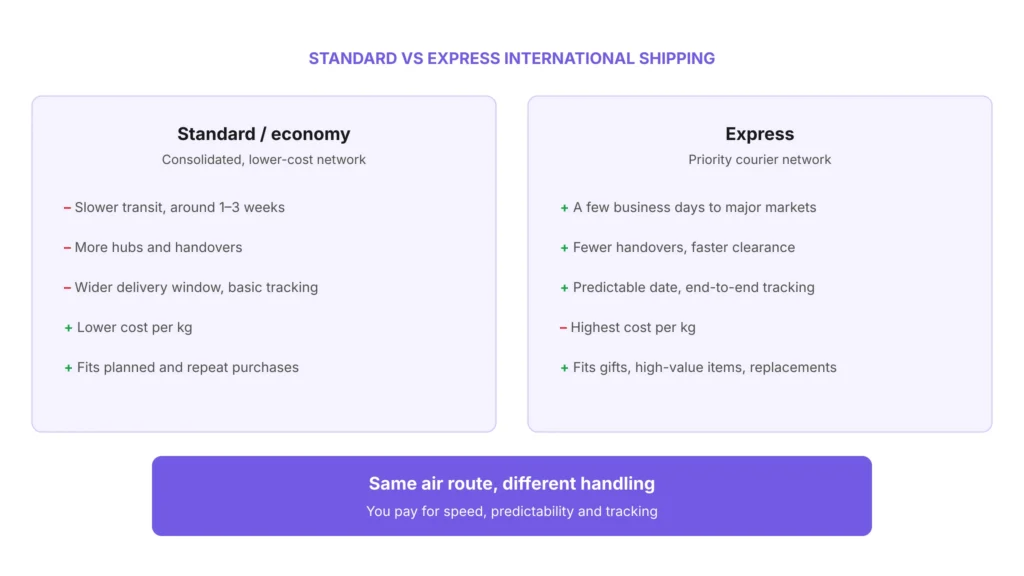
Both options move your parcel from India to an overseas buyer by air. The difference lies in how the courier handles it along the way.
એક્સપ્રેસ આંતરરાષ્ટ્રીય શિપિંગ uses a courier’s priority network. Parcels move on scheduled flights with fewer handovers, get faster customs processing and are delivered by the courier’s own team or a premium partner. Tracking is usually detailed at every step.
Standard international shipping consolidates many parcels to cut costs. Shipments may wait for the next consolidated flight, pass through more hubs and be handed to a local postal or partner network for the last mile. Transit takes longer and the delivery date is less precise.
લાક્ષણિક ડિલિવરી સમય
International courier delivery time varies by carrier, service, destination and customs. As a rough guide:
| પરિબળ | એક્સપ્રેસ | Standard / economy |
|---|---|---|
| લાક્ષણિક પરિવહન સમય | A few business days to major markets | લગભગ 1-3 અઠવાડિયા |
| હેન્ડલિંગ | Priority network, fewer handovers | Consolidated, more hub stops |
| ટ્રેકિંગ | Detailed, end to end | Basic, may go quiet after handover |
| સોંપણી તારીખ | વધુ અનુમાનિત | પહોળી બારી |
| કિગ્રા દીઠ કિંમત | સૌથી વધુ | નીચેનું |
| માટે શ્રેષ્ઠ | Urgent, high-value or gift orders | Planned, low-value or repeat orders |
Always check the transit time for the exact service and country before you promise a date. “Standard” means different things at different couriers, so compare named services, not labels. For more on the cheaper end, see our guide to અર્થતંત્ર વિ માનક આંતરરાષ્ટ્રીય શિપિંગ.
How Delivery Speed Influences Purchase Decisions
Speed isn’t just a logistics metric. It shapes whether a buyer completes the order at all.
In Baymard Institute’s checkout research, 20% of shoppers who abandoned a cart said delivery was too slow. An even larger share, 40%, left because extra costs such as shipping were too high. That’s the tension every cross-border seller faces: fast delivery costs money, and high costs also drive buyers away.
International buyers feel this more than domestic ones. They’re waiting longer, they’re unsure about customs, and they often can’t easily return an item. A clear, reliable delivery date reduces that anxiety.
Speed and Customer Satisfaction
A late parcel hurts more than a slow one. A buyer who chose a 12-day option and gets the parcel on day 11 is happy. A buyer promised 5 days who waits 9 is not.
So satisfaction depends on matching the promise to the service. Express builds trust when timing truly matters to the buyer. Standard works well when you set honest expectations up front. Our article on the importance of express delivery explains how faster delivery affects loyalty.
Which Products Suit Express or Standard Shipping?
Your product category says a lot about which speed buyers will pay for.
Products That Suit Express
- Gifts and occasion wear: wedding outfits, festive clothing, rakhis and Diwali hampers have a fixed date.
- ઉચ્ચ મૂલ્યની વસ્તુઓ: jewellery, designer wear and electronics benefit from tighter tracking and fewer handovers.
- Perishable or short-shelf-life goods: where allowed, items like certain foods need to arrive fast.
- Replacements and urgent B2B samples: buyers are already waiting and patience is low.
Products That Suit Standard
- Everyday repeat purchases: skincare, tea, spices and supplements that customers reorder on a schedule.
- Low-value, lightweight items: accessories, stationery and books, where express could cost more than the product.
- ઘરની સજાવટ અને હસ્તકલા: buyers usually plan these purchases and care more about price than speed.
Compare the Options: Urgency, Value, Destination and Margin
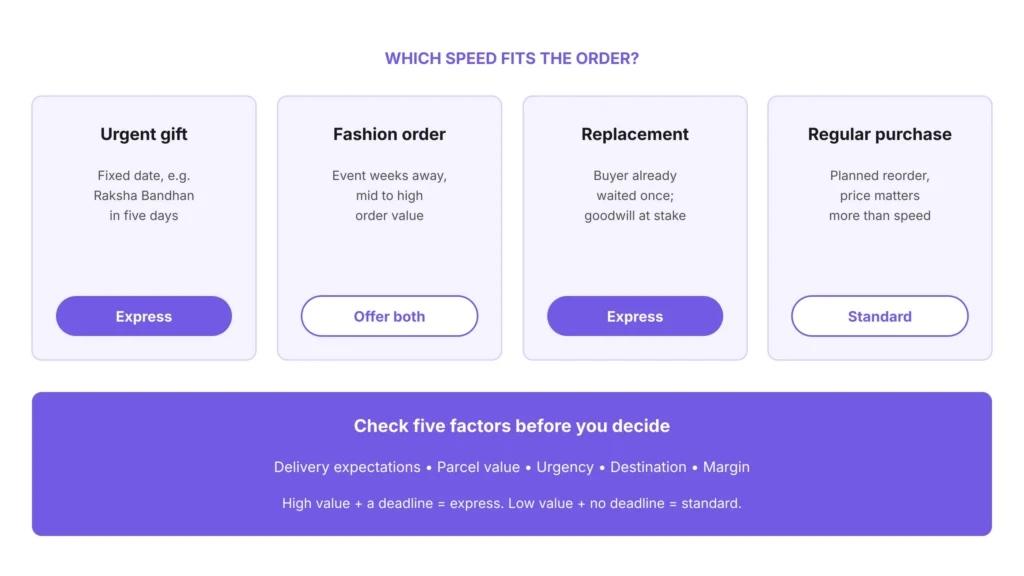
Before you set your checkout options, look at five factors for each type of order.
1. Delivery Expectations
What does your buyer expect? Shoppers in the US and UK are used to fast domestic delivery, so long international waits can feel jarring. Set an honest delivery window for each option and show it before payment.
2. Parcel Value
The higher the order value, the easier it is to absorb express rates. An express fee is a small share of the price of a ₹15,000 lehenga. The same fee on a ₹900 pair of earrings may wipe out your margin.
3. તાકીદ
Ask whether there’s a date attached. Birthdays, weddings, Raksha Bandhan, Diwali, Christmas and Eid all create deadlines. Our guide to આંતરરાષ્ટ્રીય સ્તરે ભેટો મોકલવી covers gifting-season planning in more detail.
4. લક્ષ્યસ્થાન
Transit times and rates differ sharply by country. A lane to the UAE behaves differently from one to Australia or Canada. Customs rules also differ, and a slow clearance can erase the time you paid for. Express couriers usually handle clearance faster, which matters more in strict markets.
5. Business Margins
Work out the landed cost of each order, including shipping, duties and packaging. Our explainer on જમીનની કિંમત shows how. If express pushes the order into a loss, either charge the buyer for it or reserve it for higher-value carts.
Weight matters too. Couriers charge on the higher of actual and volumetric weight, so bulky parcels get expensive fast on express. Right-sized boxes help, as our આંતરરાષ્ટ્રીય શિપિંગ પેકેજિંગ ટિપ્સ સમજાવો
Real Scenarios: Which Option Fits?
Here’s how the factors play out for four common order types. These are illustrations, not rate quotes.
Urgent Gift
A buyer in London orders a rakhi and sweets hamper five days before Raksha Bandhan. Standard won’t make it in time, and a late gift is a failed order. Offer express, and show a clear “order by” date so the buyer knows it will arrive.
Fashion Order
A buyer in New Jersey orders a ₹12,000 kurta set for an event three weeks away. Both options could work. બંને ઓફર કરો, and let the buyer choose. Many will pick standard to save money; some will pay for express for peace of mind.
રિપ્લેસમેન્ટ પ્રોડક્ટ
A customer in Dubai received a damaged item and you’re sending a replacement. They’ve already waited once. એક્સપ્રેસનો ઉપયોગ કરો, even if you absorb part of the cost. A fast replacement often turns a complaint into a loyal customer.
Regular Purchase
A buyer in Melbourne reorders their usual herbal tea every month. They know the timeline and care about price. Default to standard, and consider a free shipping threshold to encourage larger baskets.
Why Offering Multiple Delivery Options Works
Picking one speed for every buyer means you either overcharge the patient ones or disappoint the ones in a hurry. Offering a choice solves both problems.
With two or three clear options, you can:
- Serve different budgets: price-sensitive buyers pick standard, while urgent buyers pay for express.
- Protect margins: buyers who want speed cover its cost instead of you absorbing it on every order.
- Reduce abandonment: buyers who find your only option too slow or too expensive have an alternative.
- Win seasonal sales: express gives late gift shoppers a reason to still buy from you.
તેને કેવી રીતે સેટ કરવું
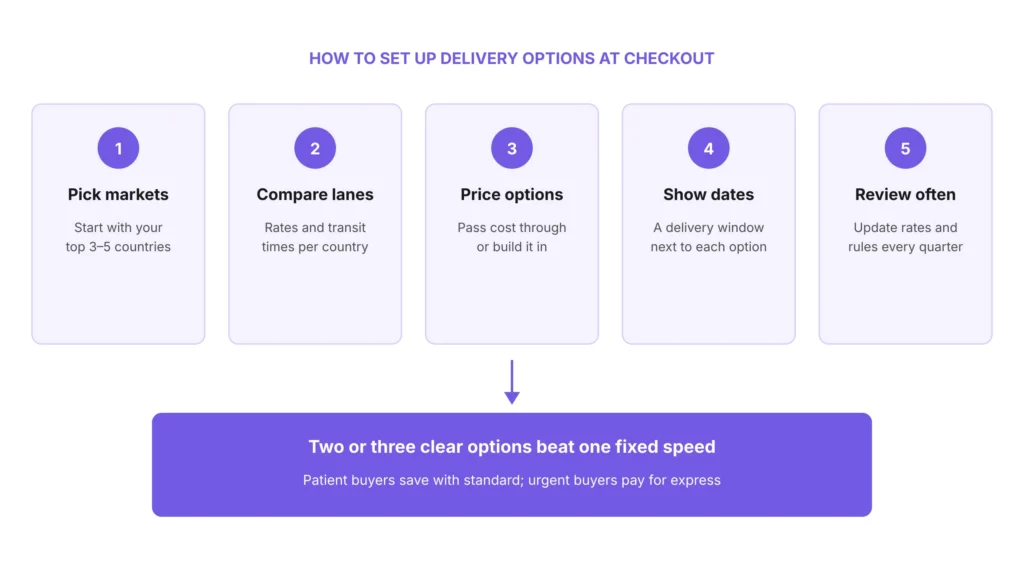
- Pick your top markets. Start with the three to five countries that bring most of your orders.
- Compare services per lane. Check rates and transit times for an express and a standard service to each country.
- Price each option. Pass the real cost through, or build part of it into product prices.
- Show delivery windows. Display “Delivered in X–Y business days” next to each option.
- Review every quarter. Rates, fuel surcharges and customs rules change, so update your options regularly.
Keep the list short. Two or three named options with clear prices and dates work better than a long menu. If you’re still building your setup, our guide on શોપિંગ કાર્ટનો ત્યાગ કેવી રીતે ઘટાડવો covers more checkout fixes.
Compare International Courier Options with Shiprocket X
શિપરોકેટ એક્સ is Shiprocket’s cross-border shipping platform for Indian sellers, covering 220+ countries and territories from one dashboard. Instead of committing to one courier, you can compare services for each shipment and destination. These include an expedited service for faster deliveries, a cost-efficient option to the US, UK, Canada and the rest of the world in 12–15 business days, and duty-paid shipping to the US in 10–12 days. [[VERIFY: current transit times for the Shiprocket X expedited/express service on US, UK and UAE lanes]]
Its shipping rate calculator helps you check rates by weight and destination before you set checkout prices. Buyers get a branded tracking page with email and WhatsApp updates, and shipment security cover lets you claim up to ₹5,000 for damage or loss, subject to its terms. That makes it easier to match express and standard services to the right orders.
ઉપસંહાર
Express international shipping from India is worth offering when timing, value or customer goodwill is on the line. Standard shipping is the smarter default for planned, low-value and repeat purchases.
The best approach for most Indian online sellers is to offer both. Compare couriers lane by lane, show honest delivery windows, and let each buyer choose the speed that suits them. When buyers get the option they want at a price they accept, more of them complete checkout and come back.