
Footwear Industry Trends: Orders, Products & Insights

The footwear industry in India is witnessing dynamic demand trends driven by seasonal shopping and evolving consumer preferences. Order volumes peaked between December 2025 and January 2026, reaching 285,065 orders, before dropping significantly to 63,216 orders in March 2026, highlighting the seasonal nature of footwear demand. Among product categories, shoes lead in sales, followed by women’s sandals and slippers, indicating strong demand for both casual and everyday footwear. While the industry shows strong growth potential through eCommerce and fashion trends, fluctuations in demand emphasize the need for brands to leverage seasonal campaigns and strategic promotions to maintain momentum.
- What Is Driving Growth in the Footwear Industry?
- Order Trends in the Footwear Industry (Dec 2025 – Mar 2026)
- Top-Selling Products in the Footwear Industry
- Niche Products with Limited Demand
- Emerging Opportunities in the Footwear Industry
- Potential Risks Impacting the Footwear Industry
- Strategic Recommendations for Footwear Brands
- Final Takeaways on the Footwear Industry
The footwear industry continues to evolve as consumer preferences, seasonal demand, and ecommerce expansion reshape how shoes are purchased online. Using insights from Shiprocket Trends by Shiprocket, brands can track real-time order volumes, product-level performance, and demand fluctuations across the footwear market.
Recent data reveals a strong order spike between December 2025 and January 2026, reaching a peak of 285,065 orders, followed by a significant decline in March 2026 with 63,216 orders. This pattern highlights how the footwear industry is influenced by seasonal demand, festive purchases, and product launch cycles.
In this blog, we explore:
• Footwear order trends and seasonal demand
• Top-selling footwear products
• Emerging consumer buying behavior
• Growth opportunities in the footwear market
• Risks impacting the footwear industry in 2026
What Is Driving Growth in the Footwear Industry?
The footwear industry has been expanding steadily due to rising disposable income, fashion consciousness, and ecommerce accessibility. India remains one of the largest producers and consumers of footwear globally, with increasing demand across casual, sports, and lifestyle categories.
Key factors driving footwear demand include:
• Growing ecommerce adoption
• Rising fashion and lifestyle awareness
• Expanding middle-class consumer base
• Increasing online availability of footwear brands
• Influence of social media and fashion trends
As online marketplaces grow, footwear brands are increasingly using demand insights to track which products and styles perform best.
Order Trends in the Footwear Industry (Dec 2025 – Mar 2026)
Recent data shows clear seasonal fluctuations in footwear demand.
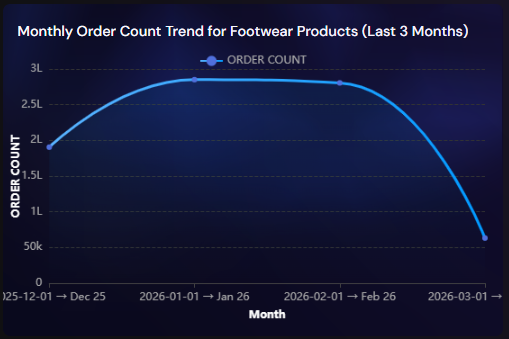
Key insights include:
• Orders surged to 285,065 in January 2026, marking the peak demand period
• Demand remained strong during the holiday and festive shopping season
• Orders declined sharply to 63,216 in March 2026
Possible reasons for this trend include:
• Holiday shopping and gifting behavior
• New year product launches
• Seasonal demand for fashion footwear
• Reduced consumer spending after festive months
This trend suggests that the footwear industry heavily depends on seasonal buying cycles.
Top-Selling Products in the Footwear Industry
Product-level data reveals which footwear categories dominate ecommerce orders.
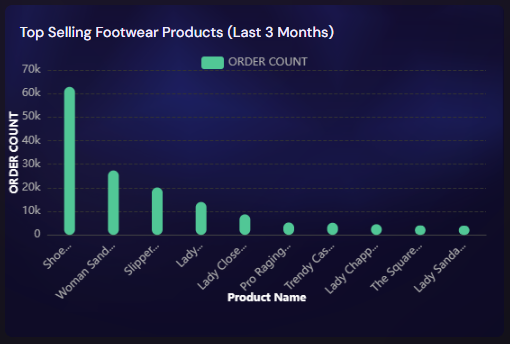
1. Shoes – Highest Demand
‘Shoe’ is the most purchased product with 62,823 orders, indicating strong demand across casual and everyday footwear.
Reasons for strong performance:
• Versatile daily wear
• Broad consumer appeal
• High repeat purchase frequency
2. Woman Sandals – Fashion-Led Demand
Women’s sandals are the second most popular category, reflecting the growing influence of fashion-focused purchases.
Key demand drivers:
• Seasonal fashion trends
• Lightweight and casual wear preference
• High online discoverability through visual content
3. Slippers – Everyday Comfort Category
Slippers remain a consistent seller due to their affordability and everyday usage.
Why slippers perform well:
• Budget-friendly pricing
• Comfort-driven buying decisions
• High repeat purchases
Niche Products with Limited Demand
Some specialized footwear products recorded significantly lower order volumes.
Examples include:
• Pro Raging Black
• Trendy Casual Shoe
Lower demand in these categories may be due to:
• Limited brand recognition
• Narrow target audience
• Highly specific design preferences
This highlights that broad-use footwear categories tend to outperform niche or branded styles in ecommerce.
Emerging Opportunities in the Footwear Industry
Despite seasonal fluctuations, the footwear industry continues to present strong growth opportunities.
Key areas of expansion include:
• Casual lifestyle footwear
• Athleisure and sports footwear
• Affordable everyday footwear
• Fashion-driven seasonal collections
Brands that align their product launches with seasonal demand patterns can capture higher order volumes.
Potential Risks Impacting the Footwear Industry
Although the footwear market shows strong demand, certain risks could impact growth.
Major challenges include:
• Seasonal demand volatility
• Market saturation in popular categories
• Supply chain disruptions
• Shifts in consumer fashion preferences
The sharp decline in March 2026 suggests that brands relying only on peak seasons may experience unstable sales cycles.
Strategic Recommendations for Footwear Brands
To sustain growth in 2026, footwear brands should focus on demand-driven strategies.
Key actions include:
• Launch seasonal collections during festive periods
• Promote best-selling categories like shoes and sandals
• Offer discounts or campaigns during post-holiday months
• Expand product variety within casual footwear
Brands that leverage demand insights and seasonal planning can reduce volatility and improve sales consistency.
Final Takeaways on the Footwear Industry
• January 2026 recorded peak orders at 285,065
• March 2026 saw a significant decline to 63,216 orders
• Shoes, women’s sandals, and slippers dominate product demand
• Niche or highly specific products show lower engagement
• Seasonal demand strongly influences footwear sales
The footwear industry in 2026 continues to show strong growth potential, but success will depend on understanding demand cycles, focusing on high-performing product categories, and aligning marketing strategies with seasonal consumer behavior.