

Jewellery Industry Report: Trends & Market Insights

Jewellery Industry Trends – Key Insights
-
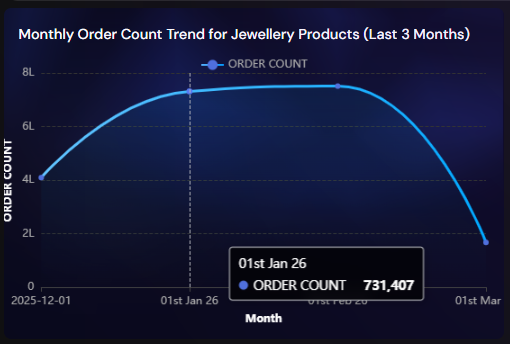
The jewellery industry saw a major order spike from December 2025 to January 2026, reaching 731,407 orders, followed by a drop to 167,341 orders in March 2026.
-
Plated & Coated Jewellery and Necklaces, Pendants & Lockets are the most popular categories, each exceeding 1 million orders.
-
Seasonal demand plays a major role in jewellery purchases, especially during festive and gifting periods.
-
Artificial jewellery and loose gemstones present opportunities for niche market growth.
The jewellery industry continues to experience dynamic shifts in demand as seasonal shopping patterns, gifting culture, and online retail influence consumer buying behavior. Recent order data highlights a major surge in purchases between December 2025 and January 2026, with total orders peaking at 731,407. However, the momentum slowed significantly by March 2026, when orders dropped to 167,341, indicating a clear seasonal fluctuation in jewellery demand. This trend is commonly associated with festive seasons, weddings, and holiday shopping, when consumers are more likely to purchase jewellery for gifting and personal use.
According to Shiprocket Trends, these fluctuations highlight how jewellery demand often follows strong seasonal cycles. Festive periods drive high sales volumes, while post-season months may witness slower order activity. For retailers and brands, this pattern emphasizes the importance of planning inventory, promotions, and marketing campaigns around peak demand periods to maintain consistent sales performance throughout the year.
Top Trending Jewellery Categories
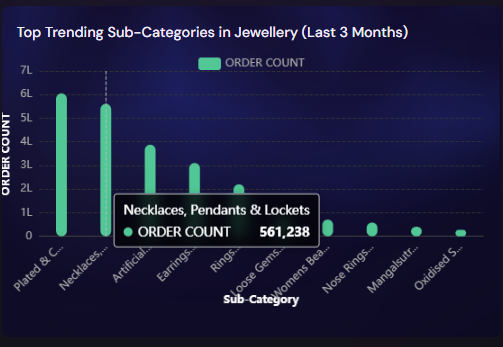
Among the various jewellery segments, Plated & Coated Jewellery and Necklaces, Pendants & Lockets have emerged as the most popular categories, each accounting for over one million orders. The strong demand for these categories suggests that consumers prefer jewellery that combines style, affordability, and versatility.
These pieces are widely favored because they cater to multiple consumer groups—from everyday fashion buyers to those looking for statement accessories for special occasions. Their adaptability across casual, festive, and formal wear makes them a consistent performer in the jewellery market.
Seasonal Demand and Market Trends
The sharp decline in order volumes in March 2026 suggests a potential seasonal slowdown after the high demand seen during festive and holiday periods. Another possible factor could be temporary saturation in top-performing categories, where consumers have already made purchases during peak seasons.
For retailers and investors, monitoring these demand cycles is crucial. By analyzing seasonal data patterns, businesses can better anticipate fluctuations and adjust their product launches, discounts, and promotional strategies accordingly. Data-driven planning can help brands maintain steady demand even during slower months.
Opportunities in Niche Jewellery Segments
While categories such as Artificial Jewellery and Loose Gemstones & Diamonds currently show lower order volumes, they offer strong opportunities for niche market expansion. These segments often appeal to specific customer groups, including budget-conscious buyers, collectors, and consumers seeking alternative jewellery styles.
Artificial jewellery, for instance, is gaining popularity among younger buyers who want trendy designs at accessible price points. Similarly, loose gemstones and diamonds attract customers interested in customization or investment-oriented purchases.
By focusing on targeted marketing and curated product collections, jewellery brands can tap into these niche segments and diversify their revenue streams.
The Future of the Jewellery Industry
The jewellery industry remains one of the most dynamic segments in retail, shaped by fashion trends, cultural traditions, and evolving consumer preferences. While seasonal demand fluctuations can impact short-term order volumes, they also create opportunities for brands to innovate with new collections, festive campaigns, and diversified product offerings.
Businesses that closely track market insights, adapt to seasonal trends, and expand into emerging categories will be better positioned to sustain growth and remain competitive in the evolving jewellery marketplace.
Conclusion
The jewellery industry continues to be shaped by strong seasonal demand, evolving consumer preferences, and expanding online shopping trends. The surge in orders between December 2025 and January 2026, followed by a sharp drop in March 2026, highlights how closely jewellery sales are tied to festive shopping cycles and gifting occasions.
While categories like Plated & Coated Jewellery and Necklaces, Pendants & Lockets dominate demand due to their versatility and wide appeal, emerging segments such as Artificial Jewellery and Loose Gemstones & Diamonds offer valuable opportunities for niche market growth. For retailers and investors, the key lies in understanding these demand patterns, diversifying product portfolios, and planning strategic promotions around peak seasons.
As consumer preferences continue to evolve, brands that leverage data-driven insights, seasonal campaigns, and diversified offerings will be better positioned to capture demand and drive sustained growth in the competitive jewellery market.





A well-structured report highlighting the latest trends and key market insights shaping the jewellery industry.