
Category Ecommerce in 2026: What’s Selling Most?

India’s online retail market is evolving rapidly. But growth in ecommerce isn’t uniform — it’s driven by specific high-performing segments. Understanding category ecommerce trends is now essential for sellers who want predictable growth in 2026.
Today, category decisions are no longer based on guesswork. With tools like Shiprocket Trends by Shiprocket, sellers can analyze real-time demand patterns, high-performing subcategories, regional order density, and seasonal spikes before investing in inventory.
That means smarter category ecommerce planning — and fewer costly mistakes.
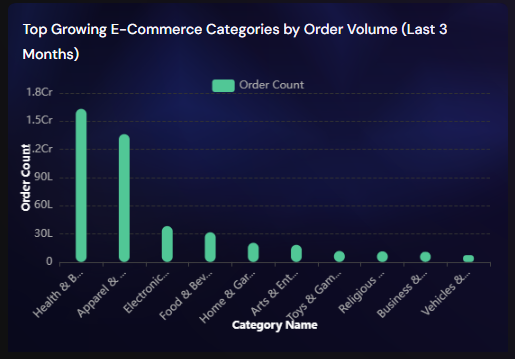
In this guide, we break down:
- The most dominant category ecommerce segments
- Fastest-growing subcategories
- Recurring revenue verticals
- High AOV categories
- Emerging trends shaping 2026
What is Category Ecommerce?
Category ecommerce refers to how products are structured and classified into primary and subcategories on ecommerce platforms and marketplaces.
A strong category ecommerce strategy helps businesses:
- Improve discoverability
- Increase conversion rates
- Optimize paid marketing
- Reduce inventory dead stock
- Forecast seasonal demand
Simply put — category ecommerce selection directly impacts profitability.
Top Category Ecommerce Segments Driving Growth in India
1️⃣ Health & Beauty – Leading Category Ecommerce Segment
Health & Beauty continues to dominate category ecommerce in India due to repeat purchase behavior and rising wellness awareness.
Growth drivers:
- Subscription models
- Preventive healthcare awareness
- Skincare demand growth
- Tier 2 & Tier 3 penetration
This is one of the most stable and scalable category ecommerce segments.
2️⃣ Apparel & Accessories – High-Volume Performer
Apparel remains a consistent category ecommerce revenue engine.
Why it performs:
- Influencer-driven shopping
- Festival spikes
- Affordable fashion expansion
- Trend-based micro segments
It benefits heavily from seasonal and social commerce momentum.
3️⃣ Electronics – High AOV Category Ecommerce Vertical
Electronics stands out in category ecommerce for its high average order value.
Key growth signals:
- EMI-driven purchases
- Refurbished device demand
- Smartphone upgrades
- Mega sale events
Even with lower repeat frequency, revenue per order is significantly higher.
4️⃣ Food & Beverages – Recurring Purchase Category
Food & Beverage is becoming a powerful recurring category ecommerce segment.
Why sellers like it:
- Subscription potential
- Health-conscious consumers
- Premium niche brands
- Regional specialty growth
Retention strategies work exceptionally well here.
5️⃣ Religious & Ceremonial – Stable Demand Segment
This category ecommerce segment remains culturally consistent and seasonally predictable.
Advantages:
- Festival spikes
- Lower marketplace saturation
- Strong regional demand
Why Data-Backed Category Ecommerce Strategy Wins in 2026
The ecommerce landscape is more competitive than ever. Sellers who rely only on intuition risk oversaturated segments.
Using insights from platforms like Shiprocket Trends allows businesses to:
- Identify rising subcategories before saturation
- Monitor demand heatmaps by pincode
- Predict seasonal growth curves
- Align supply chain planning
In 2026, category ecommerce success is about precision, not popularity.
Emerging Category Ecommerce Trends to Watch
- Preventive healthcare expansion
- Personalized apparel niches
- Refurbished electronics growth
- Subscription-based food commerce
- Faster delivery influencing conversion rates
Final Thoughts
Choosing the right category ecommerce segment determines:
- Profit margins
- Customer retention
- Marketing efficiency
- Long-term scalability
Health & Beauty and Apparel lead in volume. Electronics leads in revenue. Food & Beverage leads in retention potential.
But the real competitive advantage lies in combining smart category selection with data-driven insights.