

Skincare Industry Trends: Growth, Spikes & Insights

 February 23, 2026
 4 min read
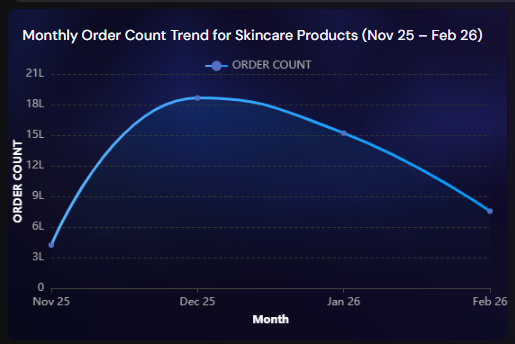
Skincare Industry Trends 2026 show a clear shift toward seasonal demand spikes, data-driven planning, and product-level competition. December 2025 recorded a peak of 1.86 million orders, followed by a sharp decline to 755K orders in February 2026, highlighting the importance of timing and retention strategies. Core categories like face wash and sunscreen continue to dominate sales, while exfoliation products and specialized serums are gaining traction. Sustainability, ingredient awareness, and AI-powered personalization are further reshaping the market. For brands, understanding skincare industry trends is essential to balancing peak-month revenue with long-term growth, smarter inventory planning, and competitive differentiation in an increasingly dynamic ecommerce landscape.
- What Are Skincare Industry Trends?
- December 2025 Surge: A Defining Skincare Industry Trend
- February 2026 Drop: Understanding Seasonal Slowdown
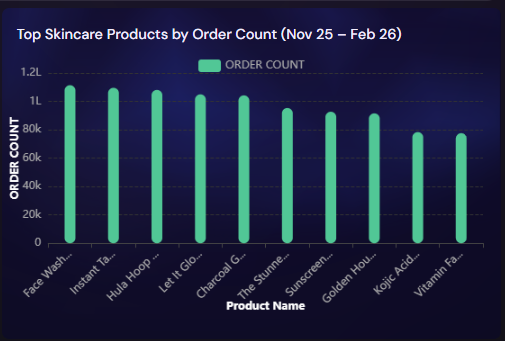
- Top-Selling Products Driving Skincare Industry Trends
- Niche Growth Opportunities in 2026
- Sustainability and Clean Beauty Momentum
- Technology Reshaping the Skincare Market
- Risks Impacting Skincare Industry Trends
- Strategic Recommendations for 2026
The global beauty market is evolving rapidly, and skincare industry trends in 2026 are becoming increasingly seasonal, data-driven, and competitive.
Recent order data shows a dramatic spike of 1.86 million skincare orders in December 2025, followed by a sharp drop to 755K orders in February 2026. This fluctuation highlights a critical insight: skincare demand is strong, but highly timing-sensitive.
Today, brands are not relying on assumptions to understand these shifts. Using real-time intelligence tools like Shiprocket Trends by Shiprocket, businesses can monitor monthly order volumes, identify peak buying windows, analyze product-level performance, and detect early signs of slowdown before revenue is affected.
In this blog, we cover:
• December demand surge insights
• February slowdown analysis
• Top-selling skincare products
• Niche growth opportunities
• Risk factors and saturation signals
• Strategic recommendations for 2026
What Are Skincare Industry Trends?
Skincare industry trends refer to evolving demand cycles, product innovations, seasonal purchasing behavior, and shifting consumer preferences shaping the global skincare market.
In 2026, these trends are influenced by:
• Seasonal gifting cycles
• Rising ingredient awareness
• Sustainability expectations
• Ecommerce expansion
• AI-driven personalization
• Growth of the male grooming segment
Tracking these patterns through structured demand insights allows brands to align inventory planning, festive campaigns, and regional distribution strategies with actual consumer behavior rather than guesswork.
December 2025 Surge: A Defining Skincare Industry Trend
December 2025 recorded 1.86 million skincare orders, marking the strongest demand month in the cycle.
Key drivers behind the surge:
• Holiday gifting behavior
• Winter hydration and protection needs
• Promotional bundles and festive campaigns
• Increased discretionary spending
Hydration-focused products, premium packaging, and curated gift kits performed exceptionally well. Data-backed tracking shows December consistently acts as a revenue acceleration month for skincare brands.
February 2026 Drop: Understanding Seasonal Slowdown
Following the December peak, order volumes declined sharply to 755K in February 2026 — nearly a 60 percent drop.
Contributing factors include:
• Post-holiday budget fatigue
• Consumer stockpiling in December
• Reduced promotional intensity
• Oversaturation in core skincare categories
This skincare industry trend highlights the importance of predictive planning. Brands that use demand intelligence to anticipate slow months can introduce loyalty programs, subscription models, and targeted retention campaigns to stabilize revenue.
Top-Selling Products Driving Skincare Industry Trends
1 Face Wash – The Everyday Essential
Face wash remains the highest-volume category due to:
• Daily usage frequency
• Affordable price points
• High repeat purchase rates
• Broad target audience
However, competition is intense, making differentiation through ingredients, branding, or dermatological positioning essential.
2 Sunscreen – Awareness-Led Growth
Sunscreen demand continues to grow because of:
• Increased awareness of UV damage
• Dermatologist-backed recommendations
• Outdoor lifestyle adoption
• Transition to year-round usage
Sun protection is no longer seasonal — it is becoming a daily skincare staple.
3 Exfoliating Products – Routine Expansion
Exfoliation-based products are gaining momentum, reflecting:
• More advanced skincare routines
• Ingredient-conscious consumers
• Social media–driven skincare education
Consumers are moving beyond cleansing and moisturizing toward targeted treatment regimens.
Niche Growth Opportunities in 2026
Emerging skincare industry trends reveal opportunities in:
• Instant tan removal solutions
• Glow-enhancing masks
• Specialized serums
• Targeted repair treatments
If these categories sustain demand beyond seasonal peaks, they can unlock long-term revenue growth. Diversification reduces dependency on saturated segments like face wash and sunscreen.
Sustainability and Clean Beauty Momentum
Modern consumers increasingly prefer:
• Organic ingredients
• Herbal formulations
• Vegan-certified products
• Eco-friendly packaging
Transparency and environmental responsibility are becoming purchase drivers rather than optional value additions.
Technology Reshaping the Skincare Market
Personalization is emerging as a strong innovation driver. Companies like L’Oréal have introduced AI-powered tools such as Perso, which analyze skin conditions and deliver customized skincare formulations.
Industry-wide technological shifts include:
• AI-based skin diagnostics
• Personalized regimens
• Smart skincare devices
• Data-driven product recommendations
Technology integration is expected to accelerate through 2030.
Risks Impacting Skincare Industry Trends
Despite growth projections, brands must consider:
• Seasonal volatility impacting cash flow
• Product saturation in core categories
• Ingredient sensitivity concerns
• Over-reliance on heavy discounting
• Rising customer acquisition costs
Balancing acquisition with retention is essential for sustainable growth.
Strategic Recommendations for 2026
December Growth Strategy
• Launch festive-exclusive gift kits
• Introduce limited winter collections
• Collaborate with influencers
• Offer premium bundled packages
Post-Holiday Stabilization Plan
• Implement loyalty rewards in January and February
• Launch subscription refill programs
• Bundle complementary products
• Retarget repeat buyers with personalized campaigns
Long-Term Expansion Strategy
• Invest in niche and treatment-focused products
• Adopt sustainable packaging solutions
• Leverage personalization technologies
• Strengthen ecommerce and omnichannel presence
Final Takeaways on Skincare Industry Trends
• The global skincare market is growing at over 7 percent CAGR
• December 2025 peaked at 1.86 million orders
• February 2026 dropped sharply to 755K orders
• Face wash and sunscreen dominate volume sales
• Exfoliation and treatment-based routines are rising
• Seasonal planning and data-driven decision-making are critical
In 2026, success in skincare will depend on balancing peak-month performance with long-term customer retention, intelligent demand forecasting, and strategic category diversification.