

Luxury Watch Market Trends: Sales Patterns & Top Products

 March 16, 2026
 3 min read
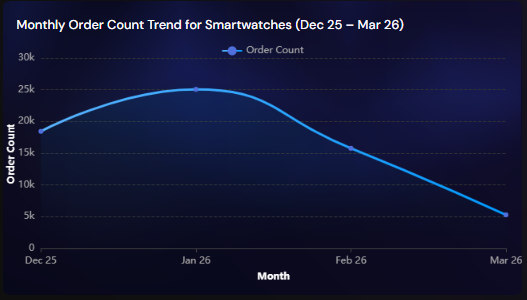
The luxury watch market trends in 2026 highlight changing consumer demand and seasonal buying patterns. Smartwatch orders surged between December 2025 and January 2026, peaking at 25,066 orders, before dropping sharply by March 2026, indicating possible seasonal demand fluctuations. Product insights show Day Journey Tracker Blue leading the market with the highest orders, reflecting strong consumer preference for specific smartwatch models. As the global luxury watch market continues to grow, brands must focus on innovation, strategic promotions, and inventory planning to sustain demand and capture emerging opportunities.
The luxury watch market continues to evolve as consumers increasingly seek premium accessories that combine style, technology, and functionality. In recent months, market data indicates a sharp rise in demand for luxury smartwatches between December 2025 and January 2026, with orders peaking at 25,066. However, this surge was followed by a significant drop in February and March 2026, when order volumes declined to 5,289. This pattern suggests a seasonal demand cycle, likely driven by holiday promotions, gifting seasons, and new product launches toward the end of 2025.
According to Shiprocket Trends, such demand spikes are common in premium electronics and luxury accessory categories, where festive shopping periods and promotional campaigns play a crucial role in driving sales. However, maintaining steady demand beyond peak seasons remains a challenge for brands operating in the luxury smartwatch segment.
Top-Selling Luxury Smartwatch Models
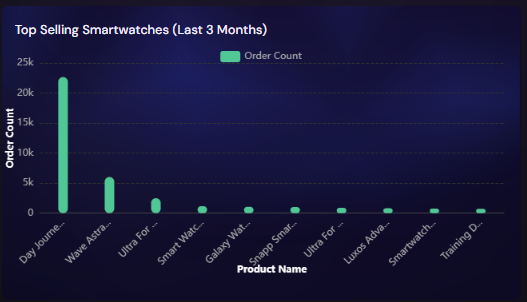
Among the various models available in the market, “Day Journey Tracker Blue” has emerged as the clear market leader, recording 22,658 orders. This overwhelming share of total orders highlights a strong consumer preference for this particular smartwatch model, likely due to its design appeal, advanced tracking features, or strong brand positioning.
In comparison, the remaining smartwatch models show significantly lower order volumes. This indicates that demand may be highly concentrated around a few standout products, while other models cater to smaller, niche audiences or rely on targeted marketing strategies.
Seasonal Demand and Market Fluctuations
The sharp drop in smartwatch orders between February and March 2026 raises important questions about the sustainability of demand in the luxury smartwatch segment. Such a decline may signal several possible factors, including:
- Market saturation after the peak holiday shopping period
- Reduced consumer spending following festive purchases
- Inventory or supply chain constraints
- Shifts in consumer preferences toward newer models
Understanding these fluctuations requires deeper analysis of promotional strategies, competitor activities, and product availability during this period.
Growth Opportunities in the Luxury Smartwatch Segment
Despite the temporary decline in orders, the luxury smartwatch market continues to present strong growth opportunities. Premium smartwatches are increasingly viewed not only as technology products but also as status symbols and lifestyle accessories.
Consumers today expect features such as health tracking, fitness monitoring, and seamless smartphone connectivity, while also valuing premium materials, brand prestige, and sophisticated design. As a result, brands that successfully combine technology innovation with luxury appeal are likely to remain competitive in this evolving market.
Strategic Considerations for Brands
The concentrated surge in demand in early 2026 suggests that strategic inventory management and well-timed promotional campaigns are essential for sustaining growth. Brands may need to diversify their product portfolios, introduce limited-edition models, or leverage targeted digital marketing to maintain consistent demand throughout the year.
Additionally, analyzing consumer data can help retailers identify which product features or design elements resonate most with buyers, allowing them to refine future product launches.
Conclusion
The luxury watch market is experiencing a shift as smartwatches increasingly blend luxury design with advanced technology. While demand peaked between December 2025 and January 2026, the sharp decline in the following months highlights the importance of understanding seasonal demand patterns and consumer buying cycles.
With standout models like Day Journey Tracker Blue dominating sales and overall demand heavily influenced by promotional periods, brands must adopt data-driven strategies, diversified product offerings, and targeted marketing efforts to sustain growth. As consumer expectations continue to evolve, companies that balance innovation, exclusivity, and customer engagement will be best positioned to thrive in the competitive luxury smartwatch market.