
15 Proven Ways to Reduce Shopping Cart Abandonment

- Unexpected costs, long checkout, limited payment options and slow delivery are the top reasons for cart abandonment.
- Offer free or flat-rate shipping to encourage purchase completion.
- Provide delivery choices and display all costs upfront for transparency.
- Simplify checkout with guest accounts and one-click options for returning customers.
- Use clear product images, descriptions and CTAs throughout the process.
- Send follow-up emails to recover abandoned carts.
- Enable multiple payment methods and strong customer support.
- Audit your site regularly to ensure a seamless experience.
- What Is Cart Abandonment?
- How To Reduce Cart Abandonment?
- 1. Provide free or flat rate shipping
- 2. Give them delivery options
- Display all costs upfront
- Focus on product descriptions and images
- Keep the check-out process simple
- Exit intent pop-ups
- Include product images throughout the process
- Guest accounts
- Highlight return policy
- Provide at least three payment options
- Employ a diligent customer support
- Enable one-click shopping for return customers
- Make crystal clear CTAs
- Send out e-mails to abandoned users
- Conduct regular audits
- Leverage Shiprocket Checkout to Reduce Cart Abandonment
- Conclusion
When setting up an eCommerce website, one of the biggest challenges for sellers outside the major metros is shopping cart abandonment. You may have worked hard to source products, optimise your listings and attract buyers, only to see customers add items to their cart and leave without completing the purchase. This can be frustrating and impact your revenue, inventory turnover and business growth.
In 2026, the share of online shopping carts abandoned reached 70.22% for the first time since 2013. For businesses where every order counts, this trend can feel discouraging, but it also highlights an opportunity. By understanding why customers leave and making a few strategic changes, you can recover lost sales and make every visit to your store count.
The good news is that most cart abandonment is preventable. With clear guidance and the right strategies, you can simplify the buying experience, build trust with your customers and turn browsers into loyal buyers. Here are practical and proven methods to help you reduce cart abandonment and grow your online business.
What Is Cart Abandonment?
Before we begin with the tricks, it is essential to understand what exactly we are dealing with. Cart abandonment refers to the process when a potential customer browses your website, adds products to their cart and leaves without making a purchase. This phenomenon is similar to when you select and try on clothes from an apparel shop but eventually decide to come and purchase it later or not at all.
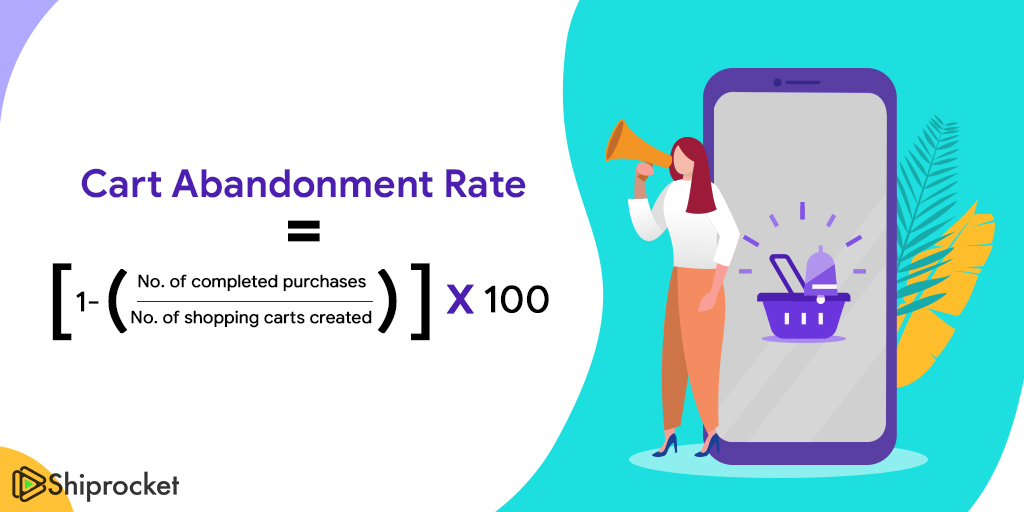
Cart Abandonment Rate
The cart abandonment rate depicts how many of the items that are added to the shopping cart are abandoned.
Significance Of Cart Abandonment Rate
Cart Abandonment determines the success of your purchase and gives you an idea of the potential revenue you can make by going through with specific optimisation. More than 65% of retailers have cart abandonment rates higher than 50%. It is a significant issue wherein you have a chance to maximise profits, but instead, you are stuck with unachieved targets and lost revenues. With a final cart abandonment rate, you can assess your sales and accordingly bring about changes in your website.
Reasons For Cart Abandonment
A recent study by Baymard pointed out that almost 70.19% shopping cart abandonment is done by users who are merely browsing, comparing prices or looking for gift options. These are abandonments you have no control over, but the rest is due to the following reasons
- Additional costs during checkout like shipping, taxes, handling fees, etc.
- Mandatory account creation
- A lengthy and confusing checkout process
- Limited payment options
- Delayed delivery
These are some flaws in your website which when rectified can simplify your buyer’s journey to prompt him to not leave the site without making a purchase.
How To Reduce Cart Abandonment?
Here are 15 practical and proven methods to help you reduce shopping cart abandonment and improve your checkout conversions:
1. Provide free or flat rate shipping
A smart way to entice customers is by providing free shipping. Free shipping works every time as users feel they are saving on their overall costs. Try tying up with courier partners or install shipping software which doesn’t charge massive shipping costs. If you can’t afford to offer free shipping, opt for setting a minimum cart value over which you provide free shipping. Based on demographics, you also have the option to offer flat rate shipping, provided your carrier can do so!
2. Give them delivery options
Who doesn’t like options when shopping? Provided you are shipping to a large number of people, why not give them delivery slots like Amazon? To avoid losing out on buyers who abandon the cart due to shipping time, provide them with an option of faster delivery. On the contrary, you can save on costs by offering a slightly later delivery option to people whose requirement isn’t urgent. You may allocate your shipping fees accordingly and give more options to your buyer.
Display all costs upfront
When you display product costs on your website, include all taxes and shipping fees within the posted cost. If you can provide a discount on this cost during check out, it will have a positive effect on the consumer’s mind as compared to an increase in the value during checkout. But don’t add any costs during check out as it can lead to an automatic change in decisions and has a higher chance of cart abandonment.
Focus on product descriptions and images
Keep your descriptions prim and proper and try and stick with realistic images. Your descriptions must have all critical details, handling, usage and include other essential instructions and also all the costs. The photos have to be clear and should be as real as can be. These instill trust in the minds of the users and give them the satisfaction of assessing the product well.
Keep the check-out process simple
When your user has added products to his cart, make sure the road after that has no bumps. Ask him to fill in his shipping details and directly proceed to payment. Don’t make the mistake of asking any more information than you genuinely need. This action kills the enthusiasm and the user is tempted to leave the process midway. Also, don’t ask them to sign up right after they plan to check out as it increases the length of the process.
Exit intent pop-ups
Use creative pop-ups to connect with the customer right before he exits the page and holds his attention right there. A cart abandonment pop up can increase the chances of purchasing the product by 10%. Thus, make sure you keep the content concise and direct. The pop up must stand out and not look too persuasive. In the end, make sure you give the user an option to decline the offer you make.
Include product images throughout the process
If your user has zeroed down any product, make sure the image of that product is always visible throughout the check out process. An image stays in mind longer than text and registers well with the user.
Guest accounts
Don’t make it necessary for a first time user to make a purchase only after he makes an account. Allow him to make the purchase using a guest account and then prompt them to register. This way their journey is uncomplicated and their experience are delightful. If you keep poking them to create an account first, it is bound to drive them away.
Highlight return policy
Even though your return policies may not be the most conducive, they should be there. It reduces the anxiety or doubts the customer may have. Once he is presented with all the information, his experience is simplified and thorough.
Provide at least three payment options
Do not curb your payment options. It is a significant reason for customers to leave your site. If a person wants to purchase a product and an online wallet is the only option he has, he will move on to another site and probably never return to yours if you don’t have it. Thus, add as many payment options as you can as people can be using any.
Employ a diligent customer support
Make sure your customer support is always equipped to assist. Try and employ a customer support software which has options like live chat, help docs, ticket generation, etc. This helps your customer reach out to you, and once you can assist them correctly, you reduce the chances of cart abandonment by a large margin. Customer support can convert an upset customer into a loyal one.
Enable one-click shopping for return customers
For customers who already purchase regularly from your site, you must further simplify their process. You can enable a one-click check out for them wherein you process their payment from saved option rather than making them go through the address selection and payment processing. This saves time and optimises your check out process.
Make crystal clear CTAs
Your CTAs must be prominent, and they must drive the user to take action. Conduct a thorough check and try A/B testing to determine which CTA works best for your business. Try to analyse user journeys to understand which points on a website are not easy to navigate. Make sure you fix these and provide a seamless experience to your buyer.
Send out e-mails to abandoned users
Cart abandonment follow-up e-mails are most important. They are the fastest way to reach out to customers who might have just left your cart. It is a personalised way of reaching out to them and can be customised according to your needs. Therefore, be creative in your approach and make sure you address their issues correctly. You can opt for setting up autoresponders to target the users right after they abandon their carts. Half of all cart abandonment e-mails are opened, and a third of all lead to a purchase. Make sure you complete this step.
Conduct regular audits
Last but not least, conduct audits. Review your website regularly to make sure your process is seamless, all pages load fast, the links and images aren’t broken and the site is functioning correctly. A quick overview at regular intervals can be fruitful for the website in the long run and can help keep your cart abandonment rate low.
Application of these methods can help you decrease your cart abandonment rate, increase profits and retain maximum customers. Make sure you work on them regularly to make sure they are viable and benefit your eCommerce website positively.
Leverage Shiprocket Checkout to Reduce Cart Abandonment
One powerful tool that directly supports several of the techniques above is Shiprocket Checkout. This solution is designed to make the checkout process smoother, faster and more conversion-friendly, tackling one of the biggest causes of cart abandonment.
Key benefits of Shiprocket Checkout include:
- Faster, streamlined checkout: Customers can complete purchases quickly with pre‑filled addresses and one‑click checkout, reducing friction and hesitation.
- Multiple payment options and discount capabilities: Offering diverse payment methods and personalised coupon options helps keep customers engaged and less likely to abandon carts.
- Reduced cart abandonment and improved conversions: By simplifying the checkout process and reducing barriers such as lengthy form filling, this solution can reduce cart abandonment and increase successful sales.
Integrating such checkout optimisation tools into your store not only improves the user experience but also directly supports many of the best practices mentioned above, such as encouraging purchases, reducing checkout friction and building buyer trust, which are essential for growing your online business.
Conclusion
Cart abandonment is not just a lost sale. It is an opportunity to understand your customers better and refine your business processes. Every abandoned cart tells you where friction exists, whether it is unexpected costs, a complicated checkout, limited payment options or slow delivery.
The key takeaway is this. Small, deliberate changes can have a big impact. Offering transparent pricing, flexible delivery, multiple payment options, simplified checkout and strong customer support not only recovers abandoned carts but also drives customer loyalty. It builds trust, loyalty and repeat purchases.
Start by analysing your checkout flow, prioritising the easiest fixes and gradually implementing more advanced solutions, such as automated cart recovery emails or one-click checkout for returning customers. By treating cart abandonment as a learning opportunity rather than a loss, your business can turn every visitor into a potential loyal buyer and create a stronger, more resilient eCommerce brand.



I have new online store can u call me for provide shipping