How to Source from Delhi Wholesale Markets & Ship Orders Faster

- Delhi is home to a number of wholesale markets, making it a hub for bulk buyers and sellers.
- Key markets include Sadar Bazaar, Paharganj Market, and Gandhi Nagar, offering products from textiles and apparel to electronics, toys, and household items.
- Buyers should note MOQs, bargaining norms, peak seasons, and payment options before purchasing.
- Market selection depends on product type: textiles, groceries, electronics, or home goods.
- Transportation and logistics can be challenging due to traffic and narrow lanes.
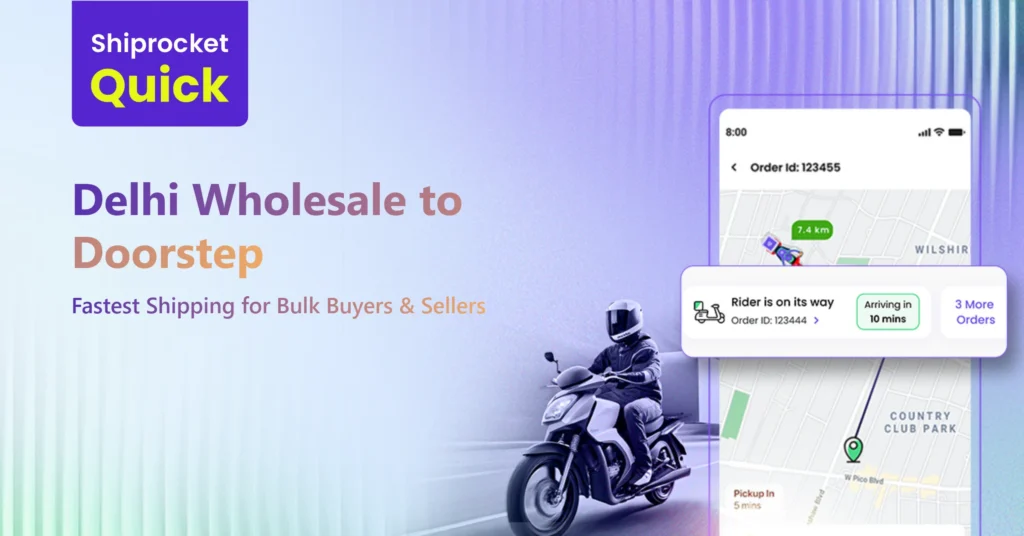
- Shiprocket Quick enables fast, reliable, and efficient movement of bulk goods within Delhi.
- Proper planning ensures better pricing, timely delivery, and scalable business growth.
- Why Delhi Is India’s Wholesale Capital
- What Should You Know Before Buying Wholesale in Delhi
- What Are the Major Wholesale Markets in Delhi
- How to Choose the Right Market Based on Your Business?
- What Are the Common Challenges Faced by Wholesale Buyers
- How Businesses Move Goods Across Delhi After Sourcing
- Hyperlocal vs Pan-India Shipping: What to Use When
- Final Thoughts: Sourcing Is Local, Growth Is Scalable
Why Delhi Is India’s Wholesale Capital
Delhi is one of the biggest centers for wholesale trade in India. If you run a small retail shop, an online store, or a local business, the city offers a chance to access a huge variety of products at competitive prices. From textiles and apparel like Raymond, FabIndia, and Biba, to electronics from Sony, Samsung, and boAt, and toys from Funskool, Mattel, and Hasbro, Delhi provides options that can help you grow your business.
With around 198 wholesale markets in Delhi, you can source quality stock in bulk, expand your product range, and increase your profit margins. Planning your purchase wisely and knowing which markets to visit can save time, reduce risks, and make your buying experience smooth and cost-effective.
In this guide, we will walk you through top Delhi wholesale markets, key buying tips, and efficient ways to move goods; helping you make confident, informed decisions that support your business growth.
What Should You Know Before Buying Wholesale in Delhi
Bulk buying in Delhi wholesale markets can be profitable, but only with the right preparation. These are the key factors every bulk buyer should understand before placing an order:
- MOQs (Minimum Order Quantities) and Price Slabs
Most wholesalers sell products in fixed minimum quantities, and pricing usually drops as order volume increases. For example, garment sellers often offer significantly lower per-piece rates for bulk purchases compared to smaller lots. Finalising your budget and quantity in advance helps secure better pricing and prevents unnecessary overspending.
- Bargaining Norms
Negotiation is a standard practice in Delhi’s wholesale markets. Prices are rarely fixed, especially for bulk orders, and sellers often expect discussion. Knowing your target price and negotiating confidently can improve margins. In many cases, higher order volumes lead to greater price flexibility.
- Payment Methods
Cash remains widely used in wholesale markets, but many sellers now accept UPI and bank transfers. Always confirm the preferred payment method before closing the deal. Requesting a proper invoice or bill is essential for accounting, returns, and future disputes.
- Peak Buying Seasons
Demand rises sharply during festive and wedding seasons. Markets become crowded, popular items sell out quickly, and prices may increase. Purchasing early helps secure stock at stable rates and avoids last-minute shortages.
- Transportation and Logistics Challenges
Transporting bulk goods through busy markets can be challenging due to narrow lanes, heavy traffic, and limited parking. Many buyers rely on mini trucks or rickshaws for movement. Planning logistics in advance ensures smoother pickup and timely delivery of goods.
What Are the Major Wholesale Markets in Delhi
Delhi hosts several established wholesale markets that attract bulk buyers from across the country. Each market specialises in specific product categories, making it easier for sellers to source inventory based on their business needs.
- Sadar Bazaar
Sadar Bazaar is one of Delhi’s largest wholesale markets in Delhi and a key sourcing destination for everyday retail products. Bulk buyers can find toys, general utilities, fashion accessories, jewellery, and household goods at competitive rates. Located centrally, the market remains busy throughout the day and operates from Monday to Saturday.
Price ranges typically fall between ₹10-₹200 per unit, depending on the product category. MOQs usually range from 10-50 units for small items like stationery and toys, while clothing and packaged goods may require 50–200 pieces per SKU.
- Products Available: Daily essentials, stationery, toys, cosmetics and household items.
- How to Reach: Tiz Hazari Metro Station
- Timing: 11:30 am to 6:00 pm
- Paharganj Market
Paharganj is a popular wholesale destination for electronics, garments, accessories, leather bags, and souvenirs. It is well-suited for retailers looking to stock both fast-moving accessories and mid-range electronics at wholesale prices.
Prices generally range from ₹50-₹500 per piece, with MOQs between 20-100 units depending on the product type.
- Products Available: Clothes, accessories, leather bags and books
- How to Reach: Ramakrishna Ashram Marg Metro Station
- Timing: 10:00 am to 9:00 pm
- Gandhi Nagar Market
Gandhi Nagar Market is one of Asia’s largest textile wholesale hubs and a major sourcing point for fabrics and ready-made garments. It supplies bulk quantities to retailers across India.
Prices start from ₹20 for basic trims and go beyond ₹500 for premium fabrics. MOQs typically range from 50-500 units per item. Shops generally operate from Tuesday to Sunday.
- Products Available: Laces, trims, ready-made attire and materials.
- How to Reach: Shastri Park Metro Station
- Timings: 10:00 am to 9:00 pm
How to Choose the Right Market Based on Your Business?
When it comes to picking the correct wholesale suppliers in Delhi for the business, it depends on what the seller sells. Here is a small and quick guide:
- General Goods or Electronics: Sadar Bazaar offers wide product variety and flexible sourcing options.
- Textiles and Fabrics: Gandhi Nagar, Tank Road, Chandni Chowk, and Karol Bagh have dedicated fabric lanes for bulk buying.
- Grocery and Spices: Sadar Bazaar and Khari Baoli are preferred markets for spices and food products.
- Lighting and Household Items: Bhagirath Palace is ideal for bulk purchases of lighting and electrical goods.
What Are the Common Challenges Faced by Wholesale Buyers
Wholesale buying offers cost advantages, but buyers often face operational and pricing challenges that can impact margins and efficiency.
- Congested Market Infrastructure: Delhi’s narrow lanes and heavy traffic frequently delay loading and movement of bulk goods, increasing turnaround time and transport costs.
- Operational Disconnects: Lack of coordination between sales, logistics, and inventory teams can lead to order mismatches, delayed dispatches, and poor visibility across the supply chain.
- Pricing and Cost Complexity: Managing regional price differences, staying competitive, and accounting for hidden costs such as taxes, handling charges, and logistics expenses can reduce expected savings.
- Reduced Buyer Leverage: Increased consolidation between retailers and manufacturers limits negotiation power, especially for smaller buyers, leading to fixed pricing and fewer customisation options.
How Businesses Move Goods Across Delhi After Sourcing
Acquiring goods is only one part of the process. Ensuring timely and efficient movement across Delhi is equally important to keep inventory flowing and operations running smoothly.
- Hyperlocal Logistics: Goods are typically moved from wholesale markets to warehouses or retail locations using small vans or three-wheeler porters for faster pickups in crowded market areas.
- Same-Day vs Next-Day Delivery: Same-day delivery suits urgent stock replenishment, while next-day movement works better for planned inventory transfers and routine restocking.
- Multiple Drop Locations: Sellers supplying multiple retail outlets require logistics that can manage several drop points in a single route without delays.
This is where hyperlocal delivery solutions like Shiprocket Quick help businesses move inventory within Delhi efficiently, reduce coordination challenges, and manage tight timelines despite traffic congestion and narrow market lanes.
Hyperlocal vs Pan-India Shipping: What to Use When
Choosing the right logistics model depends on how quickly goods need to move and where they are headed.
- Local Store Restocking: Use hyperlocal shipping when inventory needs to move within the city, such as from wholesale markets to retail outlets. Solutions like Shiprocket Quick support fast, same-day deliveries.
- Warehouse Transfers: For moving bulk stock between nearby warehouses or storage locations, same-day hyperlocal delivery is more efficient and reliable than standard courier services.
- Customer Deliveries: When fulfilling orders to customers outside the city, pan-India shipping ensures wider reach and structured last-mile delivery.
- Expansion to Other Cities: Sellers scaling beyond local markets should rely on pan-India logistics to support inter-state deliveries and consistent service levels.
Final Thoughts: Sourcing Is Local, Growth Is Scalable
Delhi’s wholesale markets offer strong pricing and product variety, but real growth depends on how efficiently that stock moves after purchase. Sellers who plan sourcing alongside logistics can rotate inventory faster, avoid delays, and protect margins. Using hyperlocal delivery for city movement and pan-India shipping for wider reach helps businesses scale without operational stress. Smart logistics transforms bulk sourcing into steady, sustainable growth.