Role of Mobile Payment Solutions in Transforming the Logistics Industry

In two years, COVID-19 has drastically changed the way organizations operate in the eCommerce world. Digital transformation has accelerated at an unprecedented rate and will continue to evolve in 2022.
With the increased adoption of contactless mobile payment solutions, the digital transition has also been easier for those in the trucking and logistics sectors.
The logistics industries have complex operational structures that are primarily relied on manual and paper-driven processes. But today, many companies have grown complacent in mobile payment solutions and digital techniques with a pragmatic approach. These logistics firms are implementing digital payment processes and tools to support real-time transactions.
Here are simple steps to getting started with mobile payment services in your logistics operations:
How Mobile Payment Solutions Powering the Logistics Industry?
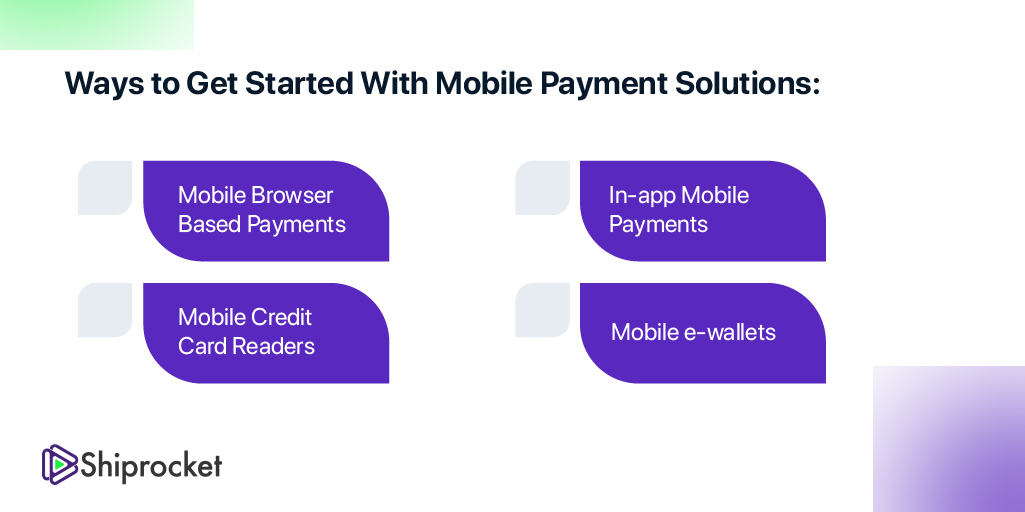
Mobile Browser-based Payments
An increasing number of organizations are ready to adopt mobile payment options in their logistics operations using smartphones and wearable devices. Reportedly, the digital payment industry in India will grow at a CAGR of 27 percent during the FY20-25 period. The growth in mobile payment systems includes mobile banking, National Electronic Fund Transfer (NEFT) via platforms such as Paytm, PhonePe, Pine Labs, Razorpay, BharatPe, and others.
We cannot neglect this massive growth, and this is why businesses must adopt mobile browser payment solutions to attract new clientele. With the Mobile Browser payment, logistics firms can make payments in a matter of a few clicks via a mobile browser. The amount is charged directly to a mobile phone bill, making purchases simple and easy.
Mobile browser-based payments allow users to make purchases with a debit card, credit card, or even net banking using a smartphone or tablet. Customers can visit a website, and by entering payment details into the website’s checkout form, they can complete a payment, all using a smartphone.
In-app Mobile Payments
A user doesn’t need to open a browser to make the in-app payment. One can do it by opening up the app if that business has one. The in-app payments securely store the previously used payment data, offer one-click payments, easily link to loyalty cards, and pre-fill contact and delivery details.
The in-app payments benefit the logistics firms in several ways as they allow them to buy select products and services within closed ecosystems. A user needs to register their credit, debit, or ACH information once to pay a bill with a few clicks.
Mobile Credit Card Readers
Accepting mobile payments is essential for a shipping company; this is where wireless credit card readers can help, allowing you to take card payments wirelessly and on the go. It would be best to have a smartphone that could run apps to connect with a mobile card reader.
With mobile credit card readers, businesses can turn smartphones into point-of-sale systems for on-the-go credit card acceptance. Investing in credit card readers allows businesses to swipe, accept payments on the spot via a wireless credit card terminal. A wireless credit card reader comes with a magnetic stripe or chip reader that does not require a direct linkup to a phone line but instead uses Wi-Fi to accept payments at various locations. These types of mobile payment solutions enable logistics providers to process transactions anywhere.
Mobile Wallets For Contactless Payments
Most users rate mobile wallets as the number one for virtual payments that store credit card numbers, debit card numbers, and loyalty card numbers. A mobile wallet is accessible through an app installed on a smartphone or tablet.
Most of us have our smartphones with us at all times, so the convenience of not switching to another mode of payment during checkout is an appealing benefit. A logistics manager or a delivery executive can even wear their mobile wallet by storing it in a smartwatch, Fitbit, or smartphone.
Bluetooth, Near field communication (NFC), Wi-fi, and similar technologies have made it easy for logistics companies to authorize transactions without having to swipe any credit or debit cards at all. With mobile wallets, you can complete a purchase with one click by simply waving the mobile device across a contactless reader that securely captures the payment information.
The NFC technology is behind popular mobile wallets like Apple Pay, Amazon Pay, Samsung Pay, and Google Play. Some more examples of mobile wallets are closed wallets, open wallets, and semi-closed wallets. The closed wallets are used to make payments with limited funds and for a specific company. Amazon Pay is the best example of a closed wallet.
PayPal is the type of open wallet used directly by a bank to use the funds in the mobile wallet for making payments for transactions. The semi-closed mobile wallets allow making payments for multiple users. But it can be done when there is an existing contract between the merchant and the mobile wallet company. However, users can withdraw the funds in cash.
Mobile wallets are not limited to payments only. Logistics providers can use mobile wallets to ensure safe access to online checkout with the preferred app.
Final Words
There’s no denying that contactless mobile payment is the future of the logistics industry. Your customers will regard you for the convenience and security of mobile payments offered. Investing in this new technology is a wise step and essential to capture your customers’ attention and boost your business.